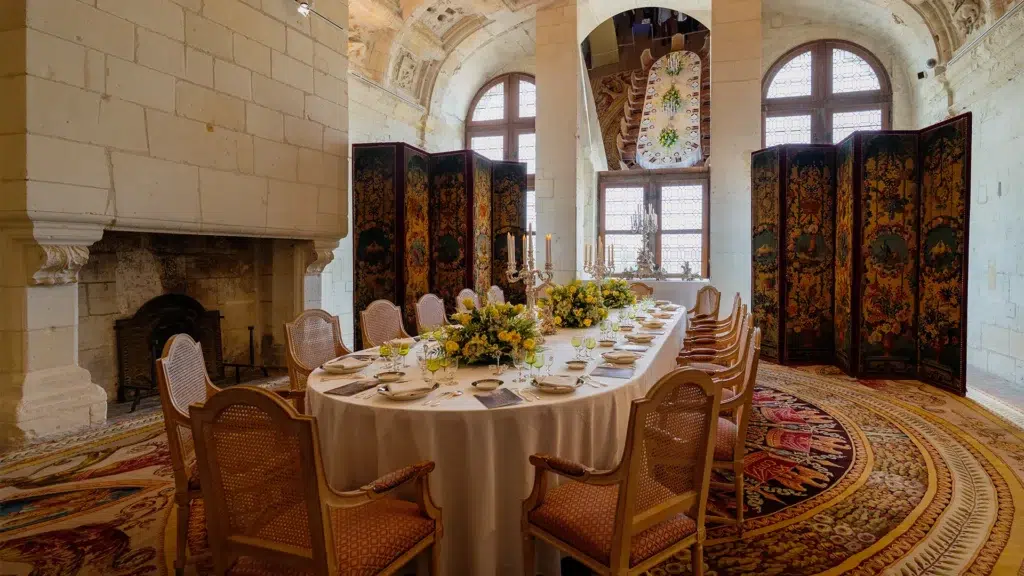
What did Francis I eat? What was a meal served to Louis XIV like? How was Lady Diana received at a state dinner at Chambord?
Chambord Castle answers all these questions with “Les Festins de Chambord” (Feasts of Chambord), an exhibition that tells the castle’s story through… its table! On view through January 24, 2027.
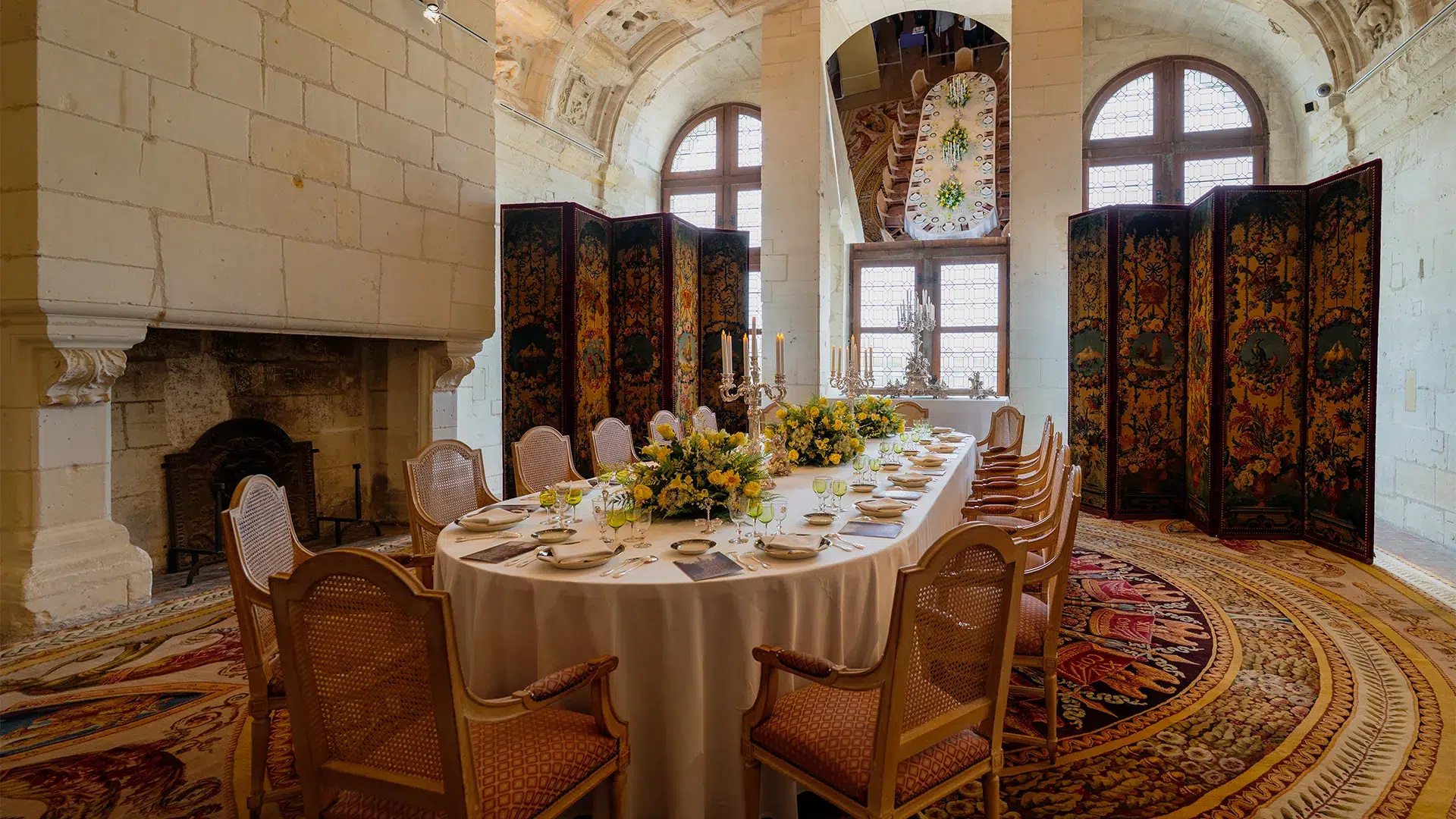
More than just a display of antique objects, this exhibition invites us to take a journey through time. Set tables, recreated tableware, scents, background music… everything is designed to give visitors the impression that they are attending the grandest banquets that have marked the castle’s history. It’s an original way to discover the castle from a perspective that’s as culinary as it is historical.
Four Centuries of Feasts
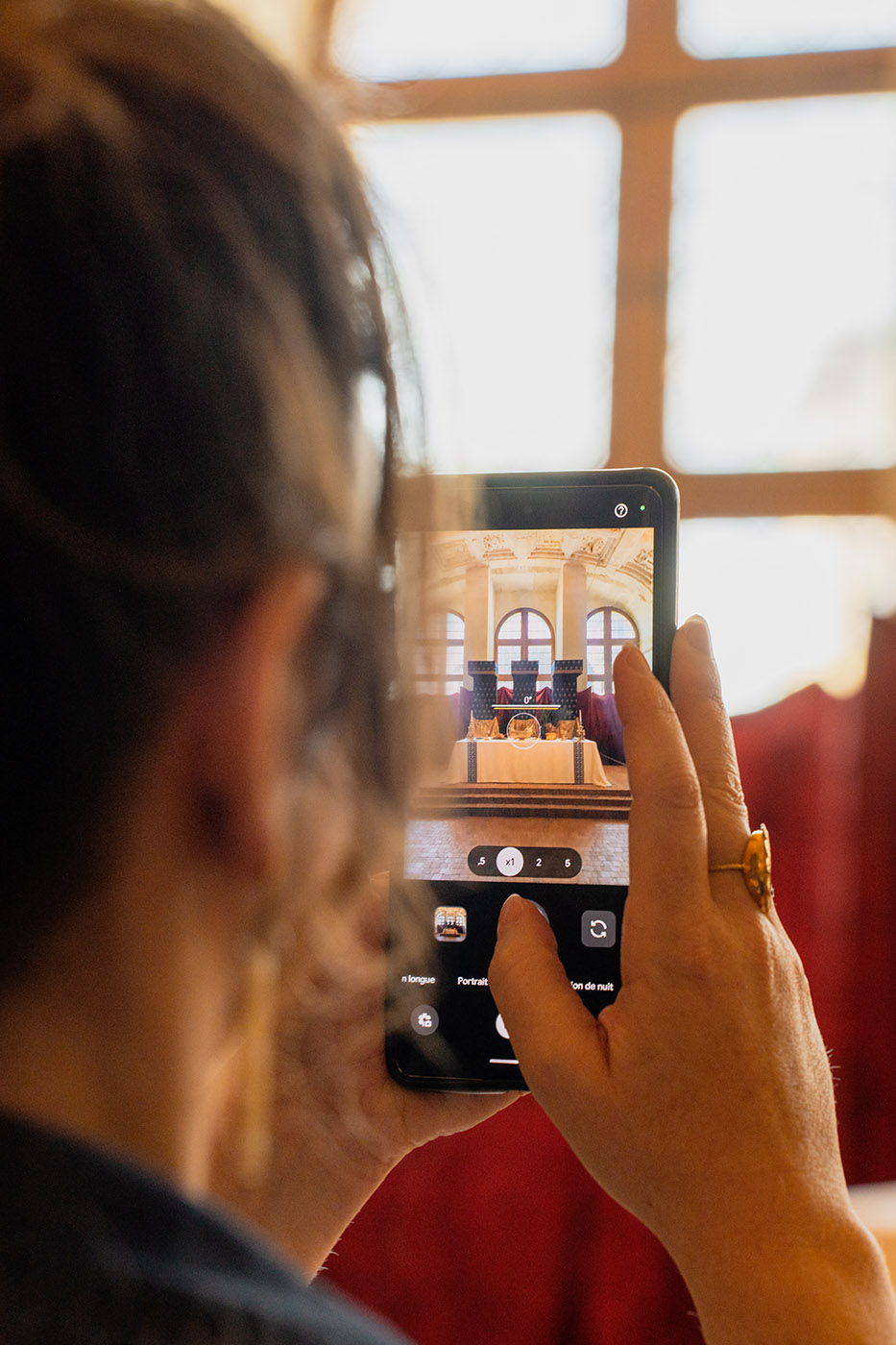
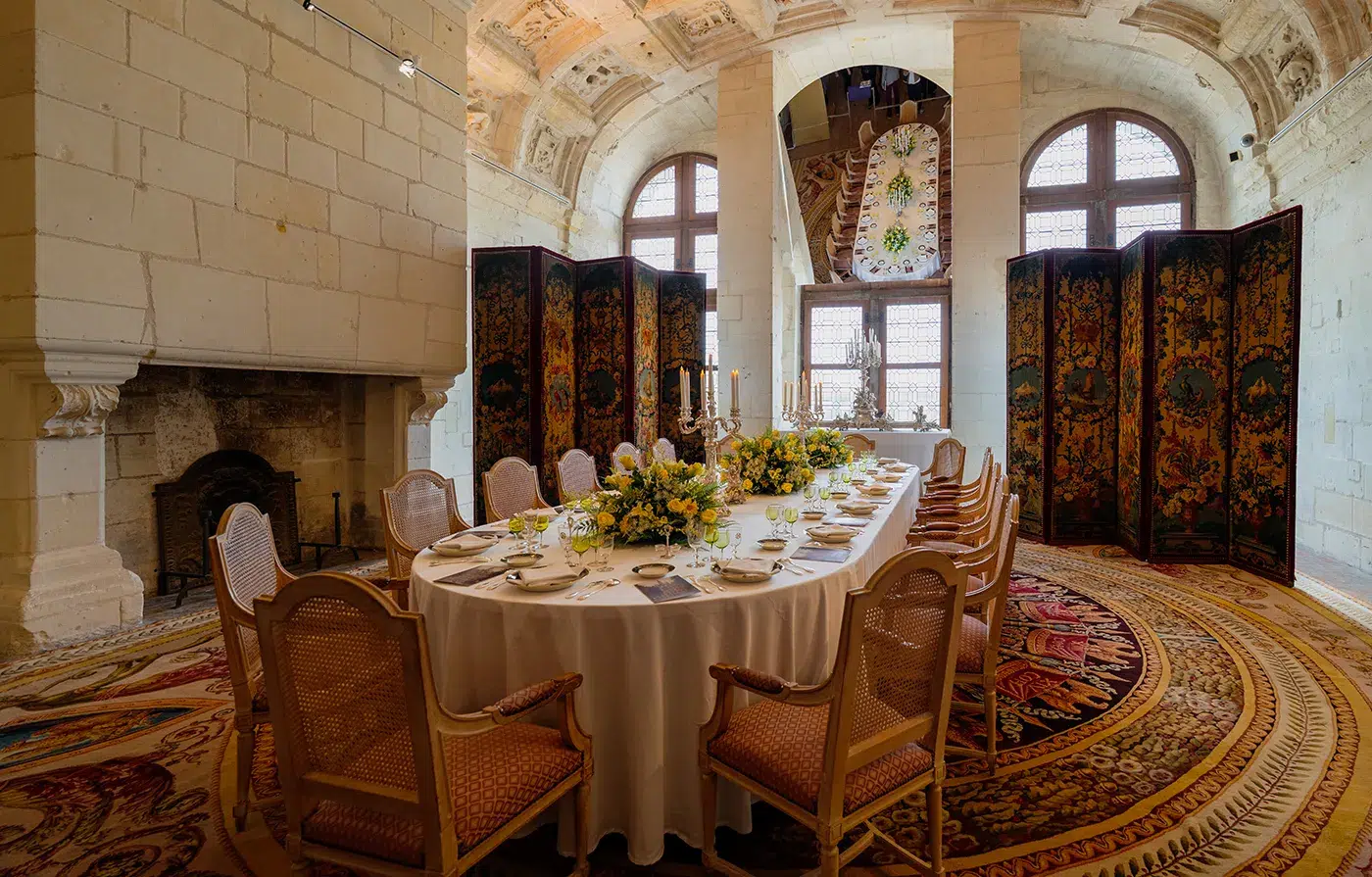
Located on the second floor, around the famous double-helix staircase, the exhibition draws on the very architecture of the Château de Chambord itself: each of the four arms of the cross is dedicated to a different era and transports us into a new atmosphere. And unlike a traditional exhibition, the tour isn’t limited to looking at display cases: the tables are fully set, the dishes look as if they’ve just been served, music accompanies the tour, and scent displays even allow visitors to experience the aromas of meals from days gone by. This sensory approach makes the visit particularly immersive.
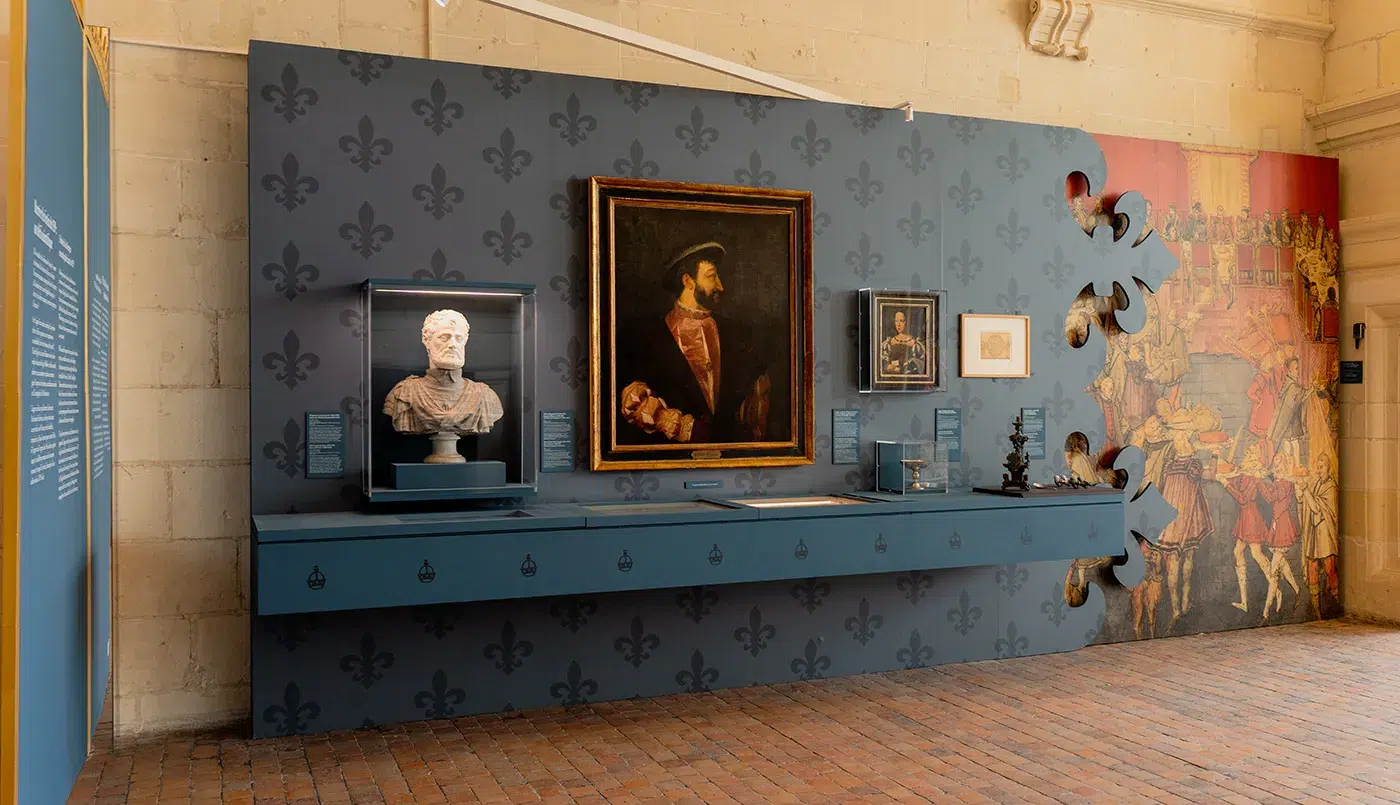
The Dinner of Francis I and Charles V
The first room takes us back to 1539, when Emperor Charles V visited Chambord.
Historians do not have a detailed account of the meal that might have been served that day. The exhibition therefore presents a scientific reconstruction based on Renaissance customs, period drawings, and current knowledge.
Impressive pieces of royal silverware are on display around the table. Many of them, which had been lost for several centuries, have been recreated through 3D modeling and printing based on old engravings. This is a first in France, making it possible to bring back to life objects that were previously known only on paper.
We also learn that the banquets were fragrant, that spices were used liberally (ginger, nutmeg, saffron), and that sugar and butter were used generously in the dishes… enough to make our mouths water!
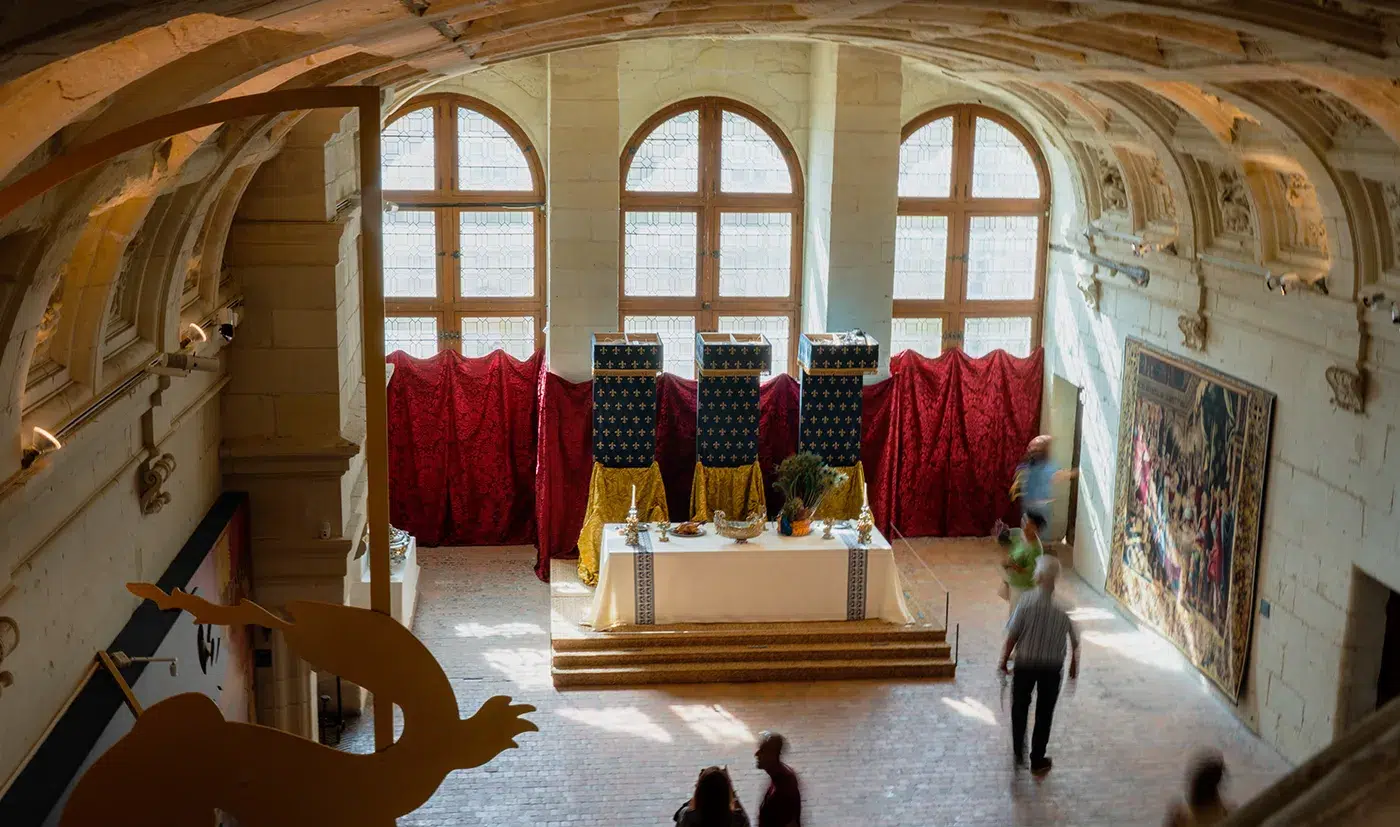
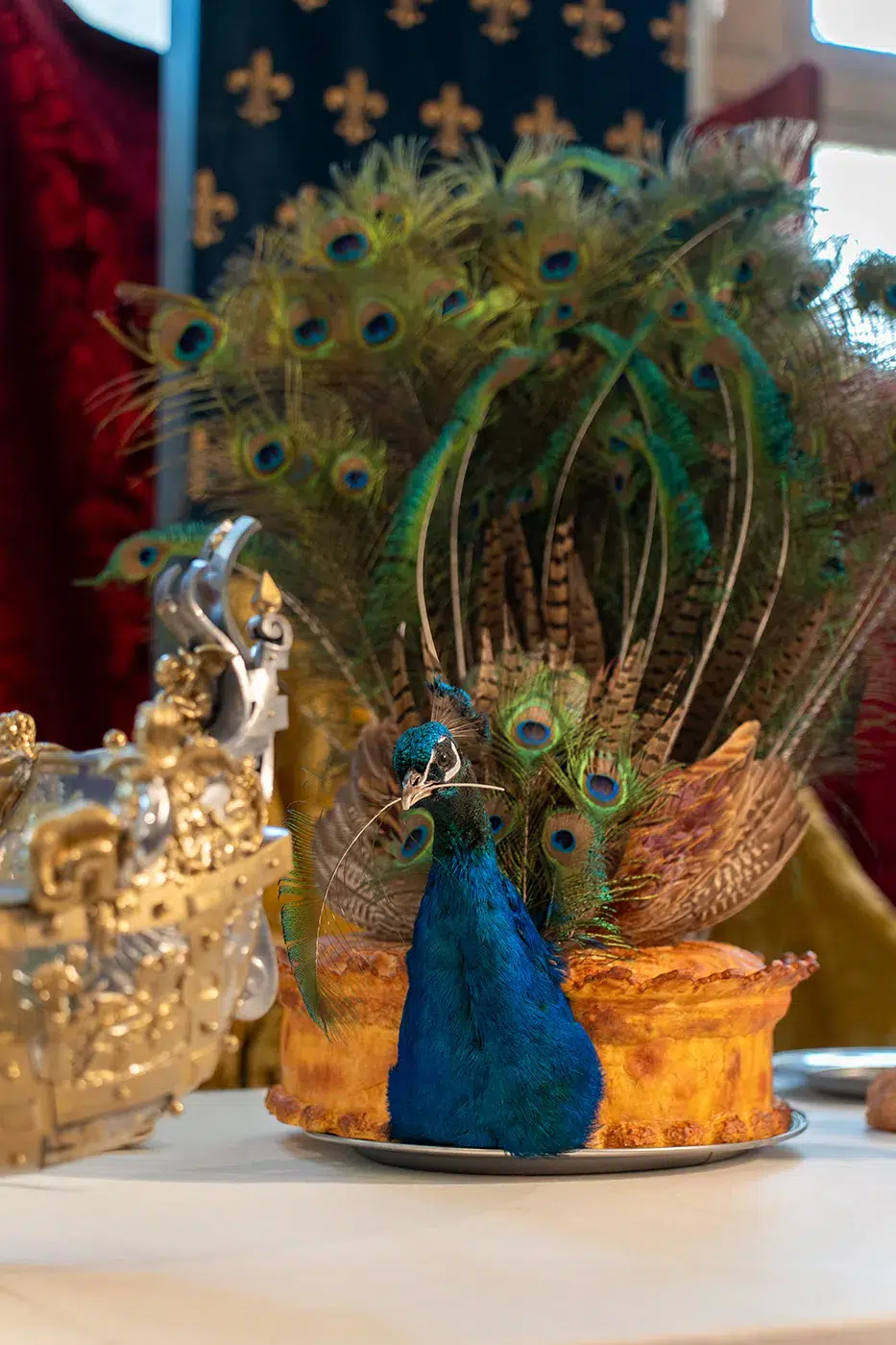
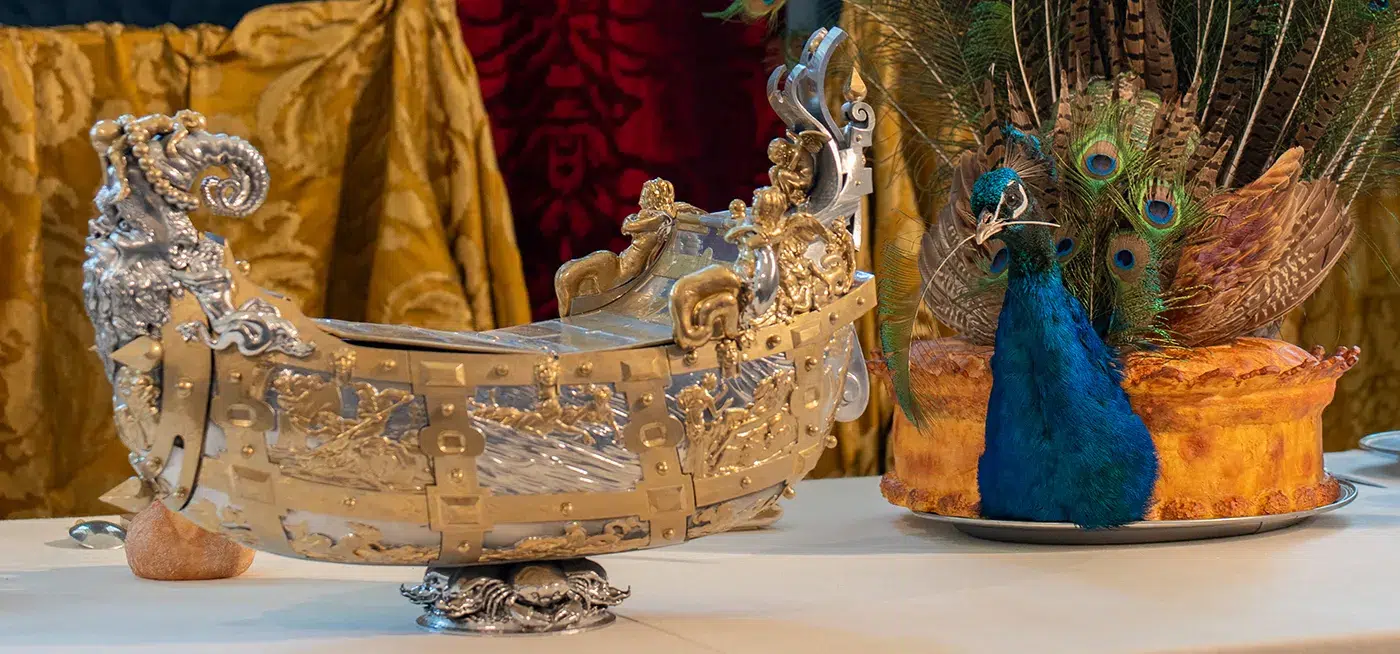
A boat for a table?! ⛵️
But what is a boat doing on Francis I’s table? It’s the “ nef ,” a ship-shaped box that held the king’s cutlery and napkins!
At Louis XIV's Table
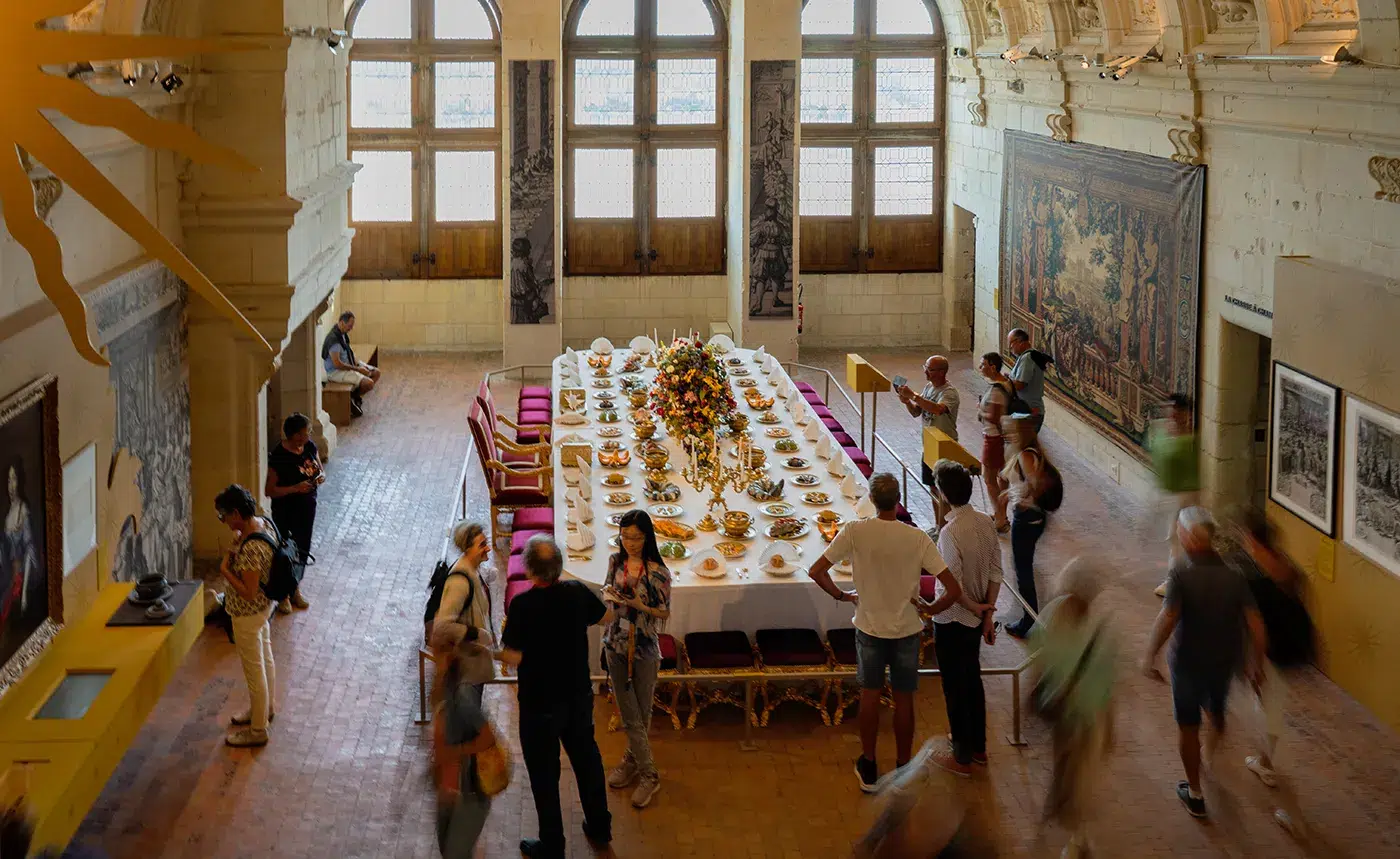
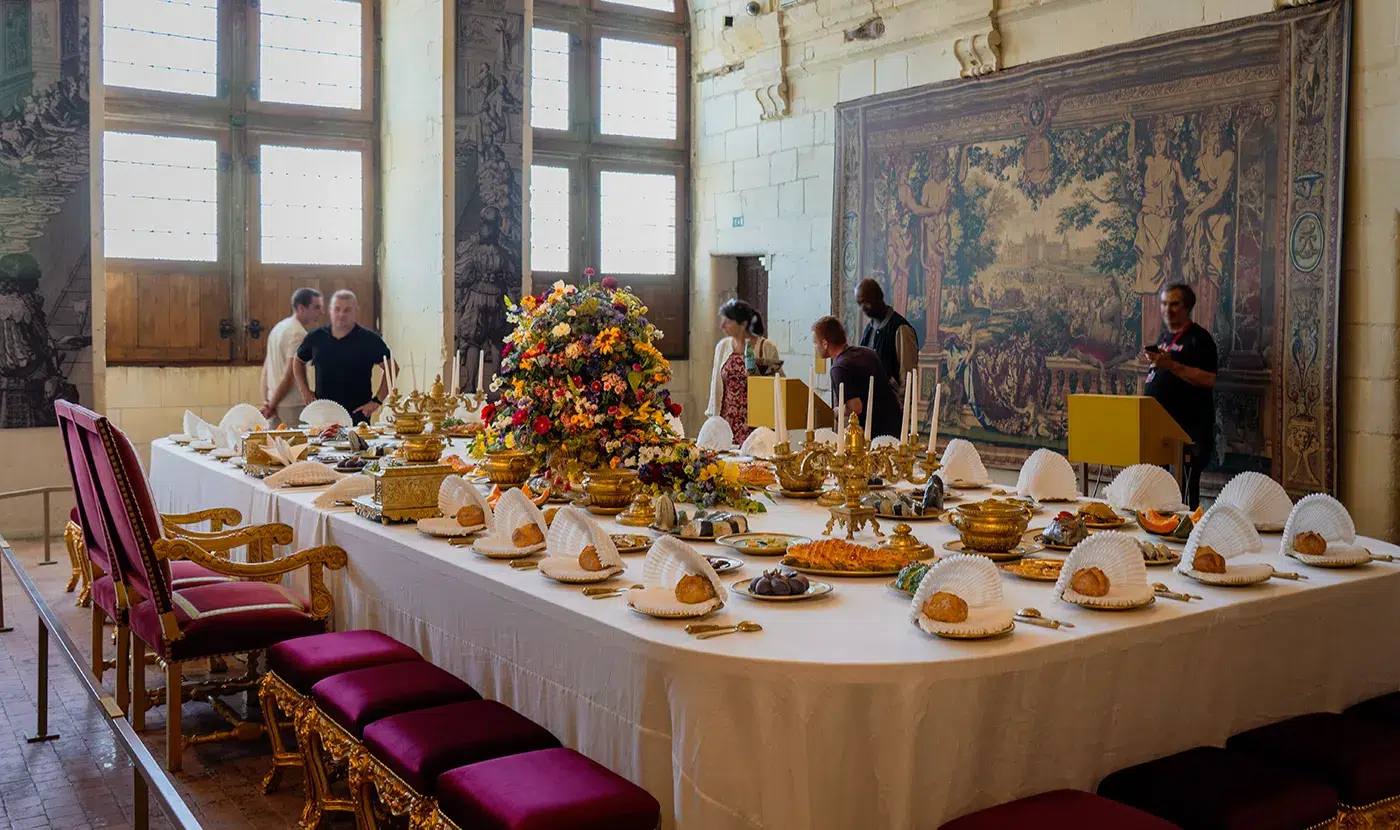
Next, we turn to the reign of the Sun King. This second table recreates a luncheon held in 1685, during Louis XIV’s final stay at Chambord. Unlike the first reconstruction, historians had access this time to an exceptional document: an actual seating chart annotated at the time by the Prince of Condé. Thanks to this document, they were able to reconstruct the meal’s layout with great precision.
Visitors can thus discover the impressive French-style service, in which dozens of dishes were presented simultaneously on the table. The dishes on display are hyperrealistic reproductions made using old recipes to recreate the appearance of 17th-century meals.
During this period, herbs were everywhere: parsley, chervil, thyme, bay leaf… were used to season dishes. Vegetables and mushrooms took on a more prominent role, and, above all, sweet and savory flavors were kept separate.
500 kitchen officers!
Many officers and servants accompanied the kings on their travels. There were 150 people accompanying Francis I to provide for him, but that was nothing compared to Louis XIV, who had 500 people dedicated to preparing and serving his meals!
The 18th Century and the Trend Toward Exotic Beverages
The exhibition then takes a leap forward in time to the 18th century, the era of Marshal de Saxe.
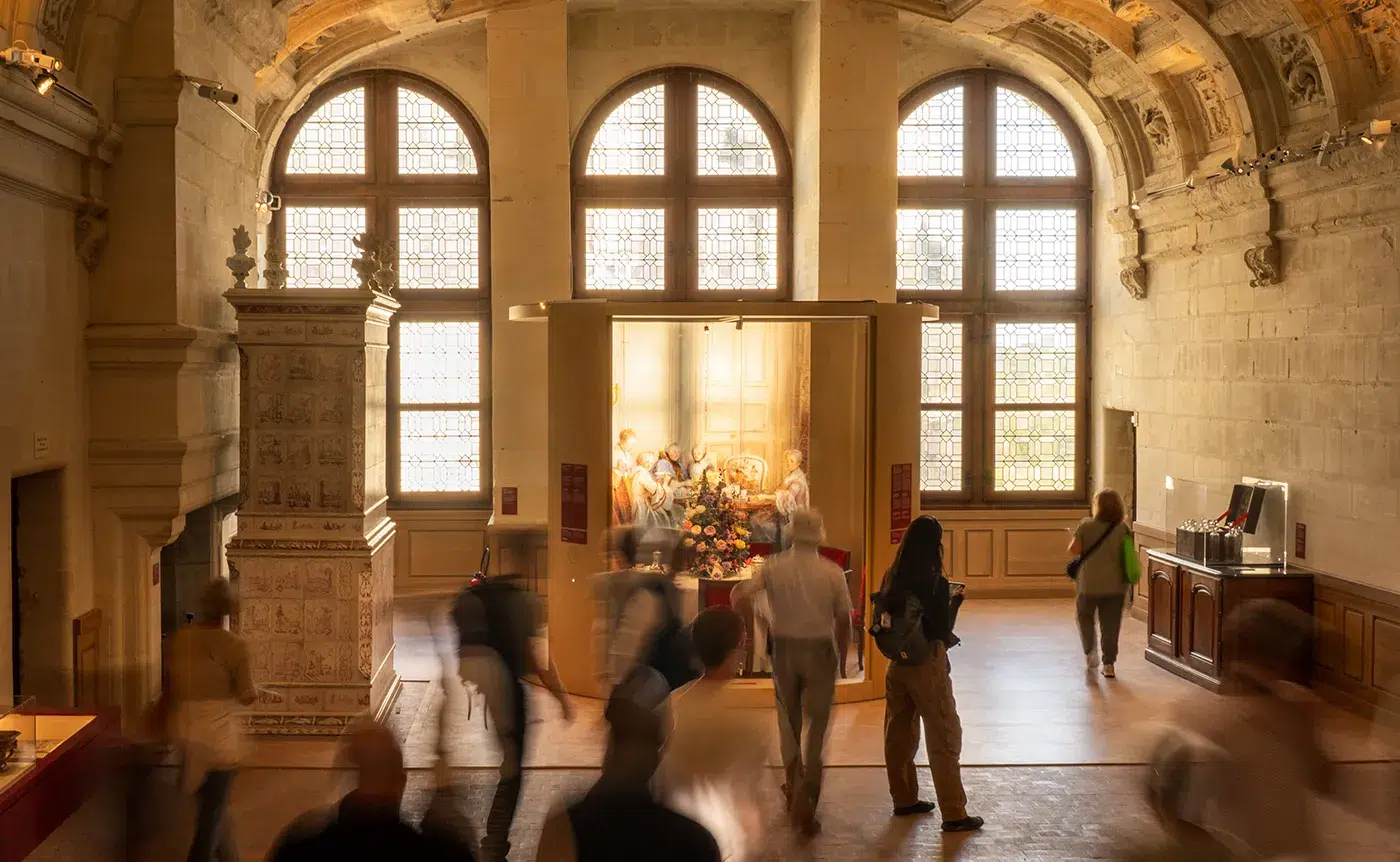
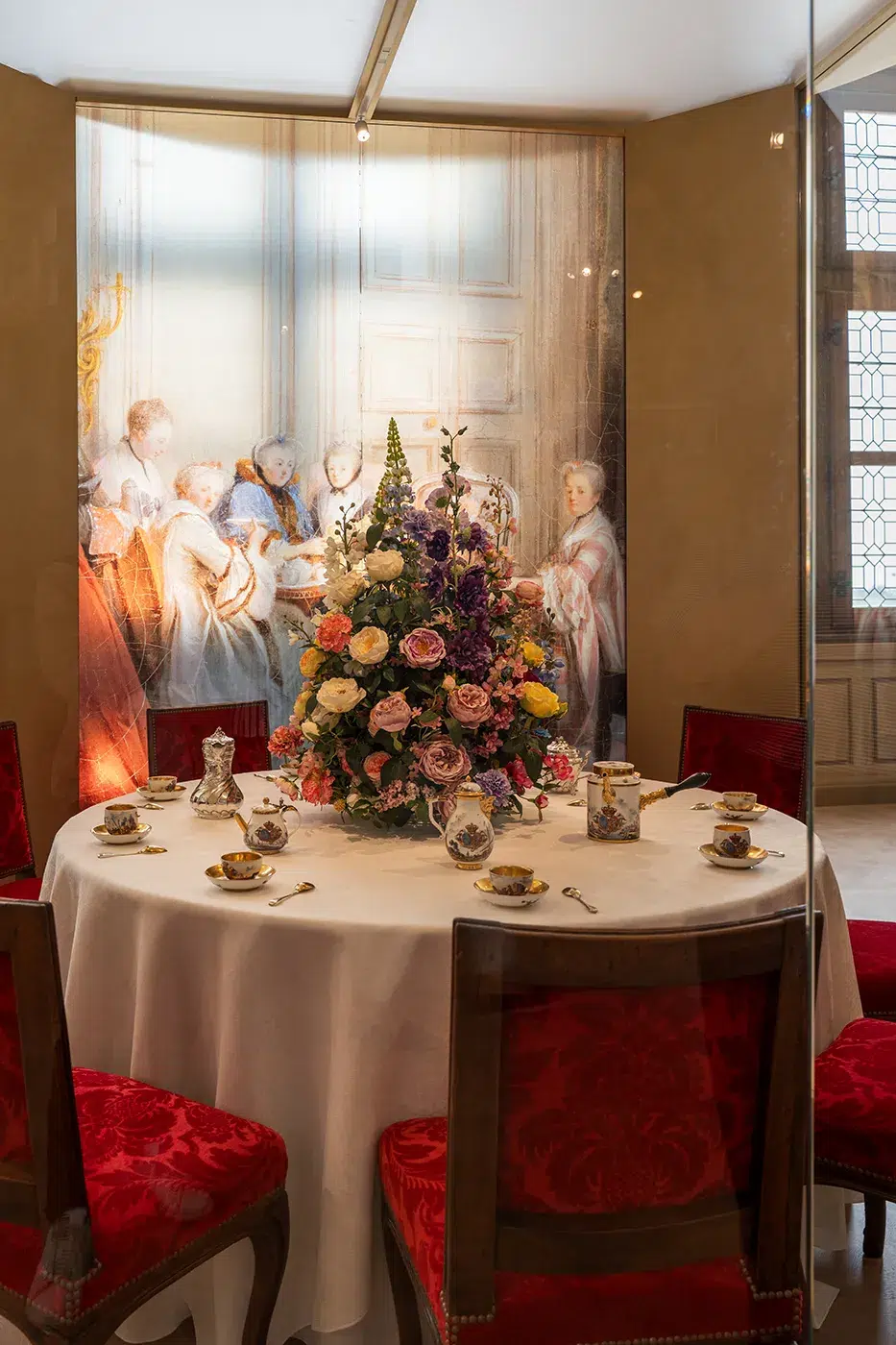
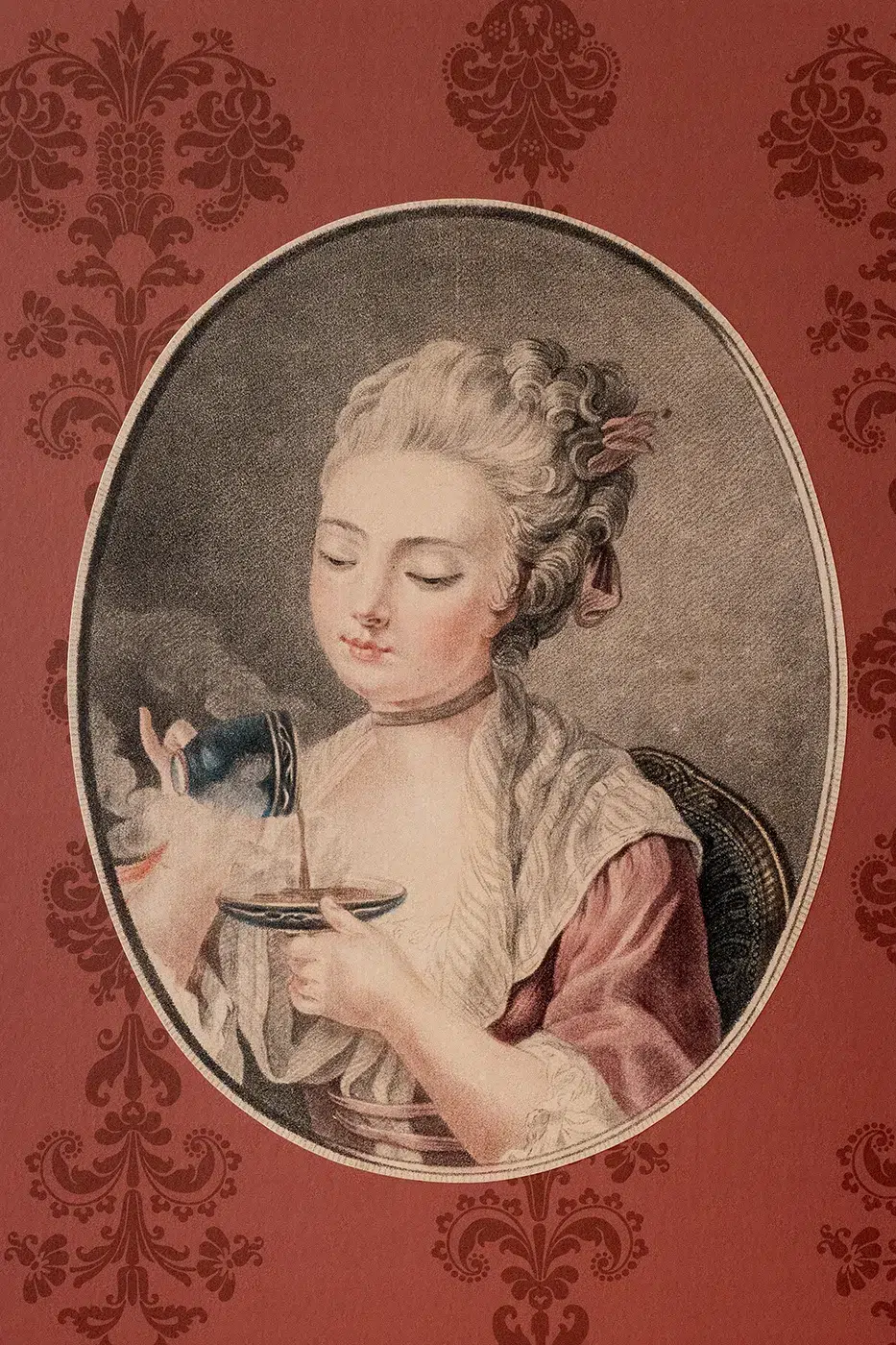
The meal is over, but the convivial atmosphere continues over new beverages that are now immensely popular: coffee, tea, and hot chocolate. A genuine “coffee room” has been recreated to evoke this new way of entertaining guests.
This section also features a special loan from the Palace of Versailles: part of Queen Marie Leszczynska’s tea and hot chocolate set, made of Meissen porcelain in the 18th century.
When Lady Diana Shows Up at Chambord
The final section takes us much closer to home, to 1988, during the gala dinner held in honor of Prince Charles and Princess Diana.
The table is set with authentic Élysée silverware, pieces from the Mobilier National, Sèvres porcelain, Baccarat crystal glasses, and cutlery from Maison Puiforcat.
The icing on the cake: the display of the dress worn by Lady Diana at that event, which was specially loaned for the exhibition.
An empty castle?!
By recreating the atmosphere of the grand banquets that enlivened the château for nearly five centuries, the exhibition curators dispel a common misconception: Chambord wasn’t always an empty castle. Behind its monumental architecture lie centuries of receptions, banquets, diplomatic meetings, and a refined way of life—all of which this exhibition brilliantly brings to light.
An exhibition that also tells the story of gastronomy
Beyond the four main tables, the exhibition explores how eating habits have evolved over the centuries.
Official menus, tableware, iconic recipes, tableware unearthed during archaeological excavations, everyday objects… all of these provide insights that help us better understand how people ate at Chambord. In particular, visitors can explore the remains unearthed in the castle’s old cesspools, a valuable source of information for archaeologists.
There is also a section dedicated to dishes inspired by Chambord, such as the famous Carpe à la Chambord, reimagined for the occasion by two-Michelin-starred chef Christophe Hay.
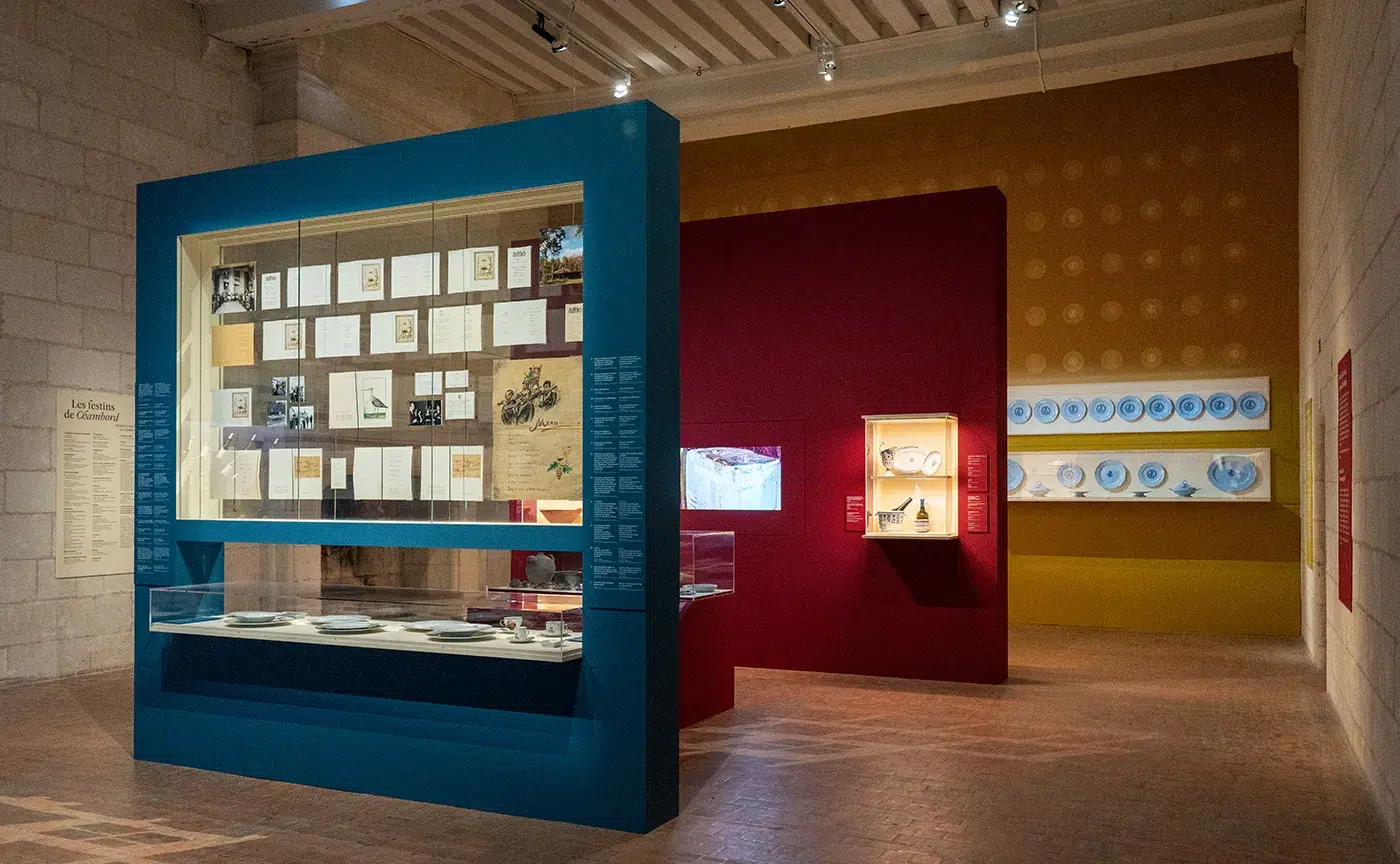
With its meticulously crafted set design and truly immersive sensory experience, Les Festins de Chambord offers a unique way to explore the castle’s history. The exhibition is sure to appeal to both castle enthusiasts and food lovers—who’ll be dying to sit down to a meal after the tour!

Practical information
Adress
Domaine national de Chambord
41250 Chambord (France)
Opening hours
Through January 24, 2027
April through October and during the Christmas break: 9 a.m. to 6 p.m.
November through March: 9 a.m. to 5 p.m.
Rates
Detailed pricing available at chambord.org
Free for European Union citizens under 26
Frequently Asked Questions (FAQ)
How long will the “Les Festins de Chambord” exhibition be open to the public?
The exhibition will be on view at the Château de Chambord from September 26, 2026, to January 24, 2027. Admission to the exhibition is included with the castle’s admission ticket.
Where in the castle is the exhibition being held?
The exhibition is located on the second floor, around the famous double-helix staircase.
Which periods are featured in the exhibition?
The exhibition recreates four major moments in the history of Chambord: a dinner during the reign of Francis I, a meal during the reign of Louis XIV, an 18th-century coffee room, and the gala dinner held for Prince Charles and Lady Diana in 1988.
Is the exhibition immersive?
Yes. Visitors will find fully set tables, recreations of dishes, soundscapes, scent installations, and numerous historical artifacts that come together to create a truly sensory experience.
What can you see at the Château de Chambord?
In addition to the exhibition Les Festins de Chambord, the ticket grants access to the castle tour. You’ll be able to explore the famous double-helix staircase, the terraces offering spectacular views of the castle’s rooftops, and the French-style gardens. The tour also allows you to explore the history of this Renaissance masterpiece, a UNESCO World Heritage Site.
How much time should I set aside to visit Chambord and the exhibition?
Allow between 3 and 4 hours to fully enjoy your visit. It takes about 2½ to 3 hours to explore the castle, plus the time needed to see the exhibition Les Festins de Chambord. If you’d also like to take a stroll through the estate or visit the French gardens, plan on spending half a day there.
How do you get to the Château de Chambord?
The Château de Chambord is located in the Loir-et-Cher department, about 15 kilometers from Blois.
By train: From Paris-Austerlitz, travel to the Blois-Chambord station, then take a shuttle or a taxi to the castle.
By car: Chambord is accessible via the A10 highway; take the Blois or Mer exit.
Is the exhibition ticket included with the castle ticket?
Yes. The exhibition Les Festins de Chambord is accessible at no extra charge: admission is included in the castle’s entrance ticket.
Is the Chambord estate worth a visit?
Yes, because Chambord is more than just its castle. The estate covers 5,440 hectares, making it the largest walled forest park in Europe. Visitors can admire the French gardens, explore the trails on foot or by bike, and, with a little luck, spot the wildlife that inhabits the estate.