
What if you set out to discover a getaway in Auvergne-Rhône-Alpes that’s off the beaten path? From the volcanic landscapes of Le Puy-en-Velay to the hilltop castles, the Loire Gorges, and the stunning architectural heritage of Firminy, the leg of the Grand Tour between Le Puy-en-Velay and Saint-Étienne offers a wealth of discoveries.
Stretching 108 kilometers, this route winds through a wide variety of landscapes and offers numerous cultural stops. Among them, one attraction is particularly worth a visit: the Le Corbusier Site in Firminy, one of the architect’s most significant projects. In 2026, this famous site will celebrate a double anniversary and host a particularly original immersive exhibition, SOLAIRE, a Sensory Odyssey.
Here’s everything you need to know to prepare for this stage of the Auvergne-Rhône-Alpes Grand Tour.
What is the Auvergne-Rhône-Alpes Grand Tour?
The Auvergne-Rhône-Alpes Grand Tour is a tourist route spanning nearly 3,000 kilometers, designed to showcase the region’s many facets. It connects 43 must-see sites spread across 28 stages, prioritizing scenic routes and landscapes over the fastest possible route.
The idea? To take the time to travel and enjoy the journey just as much as the destinations. Each leg of the trip takes about a day, but the itinerary can, of course, be adapted to suit your preferences: a single leg for a quick getaway, several legs for a long weekend, or a longer road trip.
The Grand Tour forms a loop through the region’s 12 departments. Therefore, there’s no need to start it at a specific location: everyone can customize their own itinerary.
The Stage from Le Puy-en-Velay to Saint-Étienne in a Few Figures
- 108 km
- 694 m elevation gain
- 3 Must-See Sites
- 8 cultural sites
This 17th stage gradually transitions from the landscapes of the Velay to the Loire Gorges before reaching Saint-Étienne and its creative and industrial scene.
Discover Le Puy-en-Velay: a must-see destination
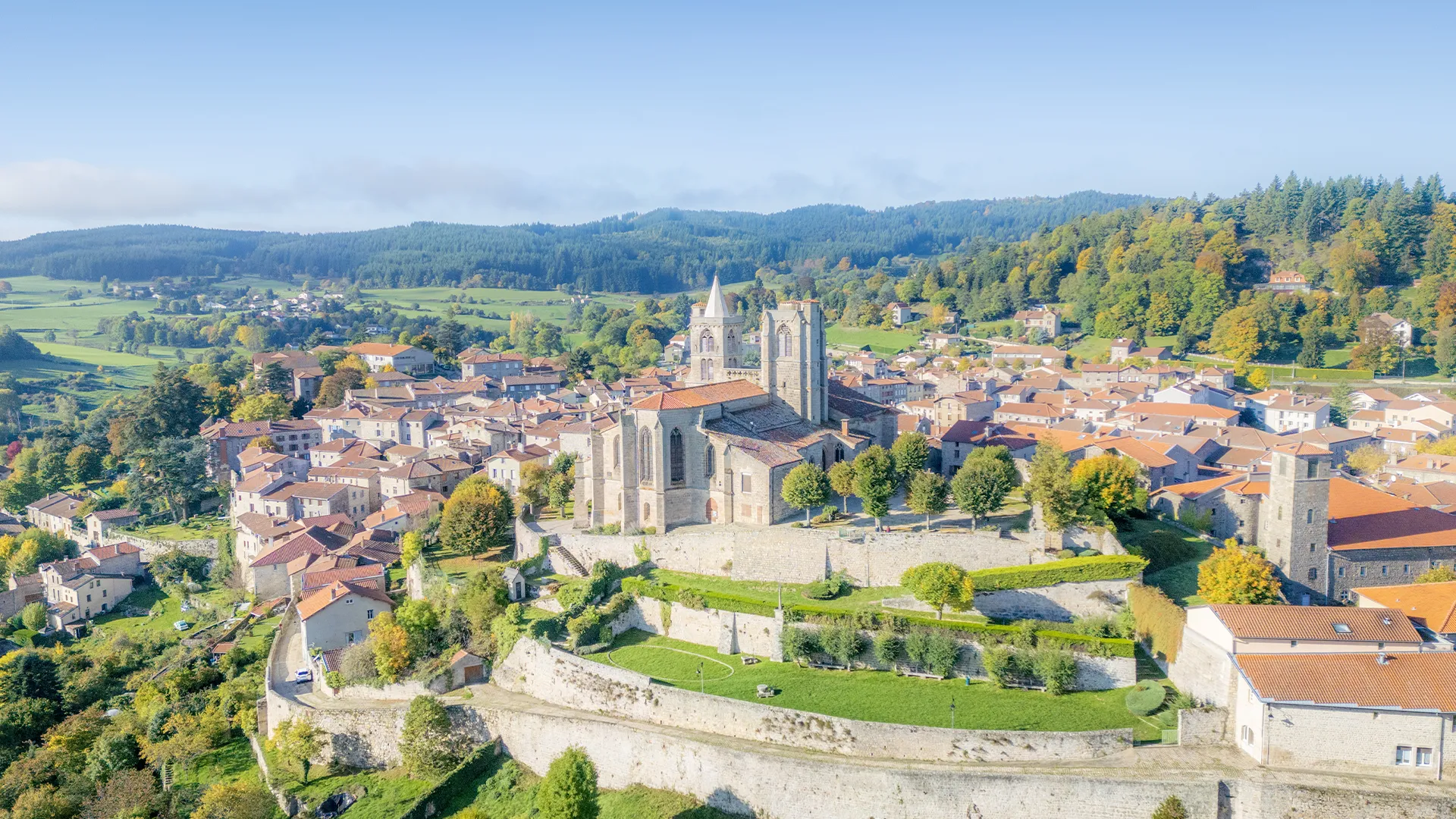
The starting point for this leg, Le Puy-en-Velay, is a town that certainly has plenty of character.
Set amid a spectacular volcanic landscape, it is particularly known for its religious heritage and for being the starting point of one of the routes to Santiago de Compostela. Before hitting the road, be sure to take some time to wander through the historic center and explore the landmarks that have made the city famous.
It’s also a chance to sample some local specialties: the green lentils from Le Puy and the Verveine du Velay, two iconic products of the region.
Polignac: A Fortress High Above the Volcanoes
Just a few kilometers from Le Puy-en-Velay, take a detour to Polignac. This village is dominated by an impressive fortress perched on a rocky outcrop. From the observation deck, the 360-degree panoramic view takes in the region’s landscapes.
Lavoûte-Polignac Castle: a castle surrounded by the Loire River
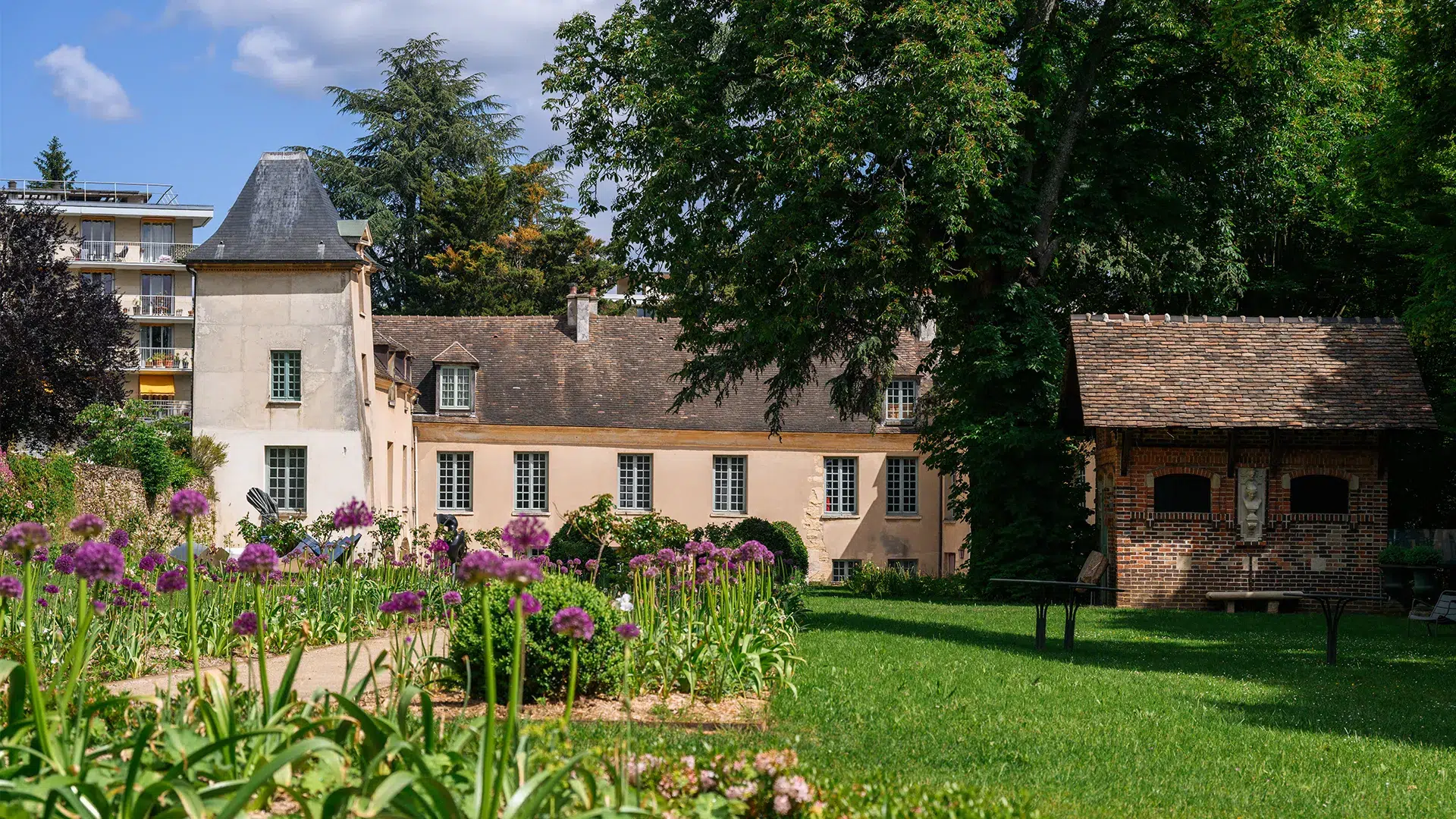
Next, continue on to the Château de Lavoûte-Polignac, whose towers have overlooked the Loire for over a thousand years. The château occupies a particularly spectacular location, as the river surrounds it almost entirely. It is one of the earliest châteaux of the “Wild Loire.”
 Good to know: The castle is open from Easter through All Saints’ Day. If you’d like to visit, be sure to check the opening days and hours before you leave.
A stop at the Lace Manufacturing Museum
This stop also offers a chance to discover a craft that is emblematic of the Velay region at the Museum of Lace-Making in Retournac.
The museum traces the history of lace makers and the evolution of lace-making, from hand-made bobbin lace to machine-made lace. It’s an interesting visit that helps visitors understand just how much traditional craftsmanship has contributed to the economic and cultural history of this region.
The Loire Gorges: A Wonderful Getaway in Nature
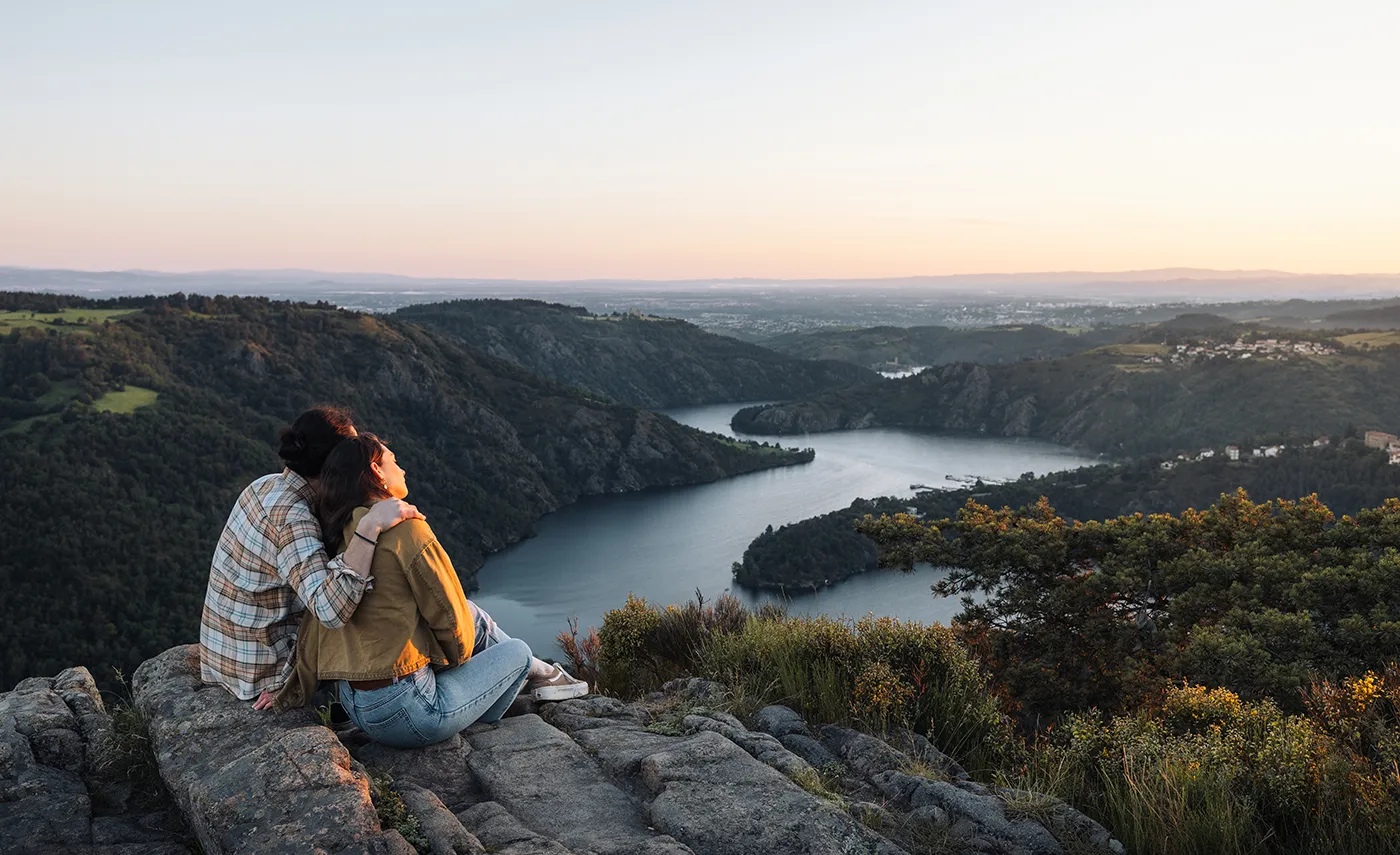
After the castles and villages of the Velay region, the landscape gradually changes. The route runs along the Gorges de la Loire, one of the 43 must-see sites on the Grand Tour, between Monistrol-sur-Loire, Aurec-sur-Loire, and Saint-Just-Saint-Rambert. Valleys, cliffs, meandering riverbends, and volcanic plateaus combine to create a setting that’s particularly well-suited for outdoor activities.
The Le Corbusier Site in Firminy: A Must-See Attraction
Amid this journey through nature and cultural heritage, a completely different landscape emerges: in Firminy, the Le Corbusier Site seems almost to spring from another world. Here, visitors can discover a major work of 20th-century architecture.
The Firminy-Vert project originated in the 1950s out of Eugène Claudius-Petit’s desire to transform the city and improve the living conditions of its residents. Le Corbusier and his collaborators contributed to this vision of a city designed with people in mind, featuring more light, nature, community facilities, and spaces for daily life.
The site includes, among other things, the Maison de la Culture, the Unité d’Habitation, the stadium, the swimming pool, and the Saint-Pierre Church. So it’s not just a matter of visiting a building designed by Le Corbusier—it’s an entire urban project that you need to try to understand.
Why is the Le Corbusier Site so important?
The Maison de la Culture in Firminy was inscribed in 2016 on the UNESCO World Heritage List as part of the series “The Architectural Work of Le Corbusier, an Exceptional Contribution to the Modern Movement,” which brings together 17 of the architect’s works across several countries.
2026 is a particularly exciting year to explore the site, as it marks a double anniversary: the Maison de la Culture is celebrating 10 years since its inscription on the UNESCO World Heritage List, while the Saint-Pierre Church is celebrating 20 years since its completion.
The House of Culture
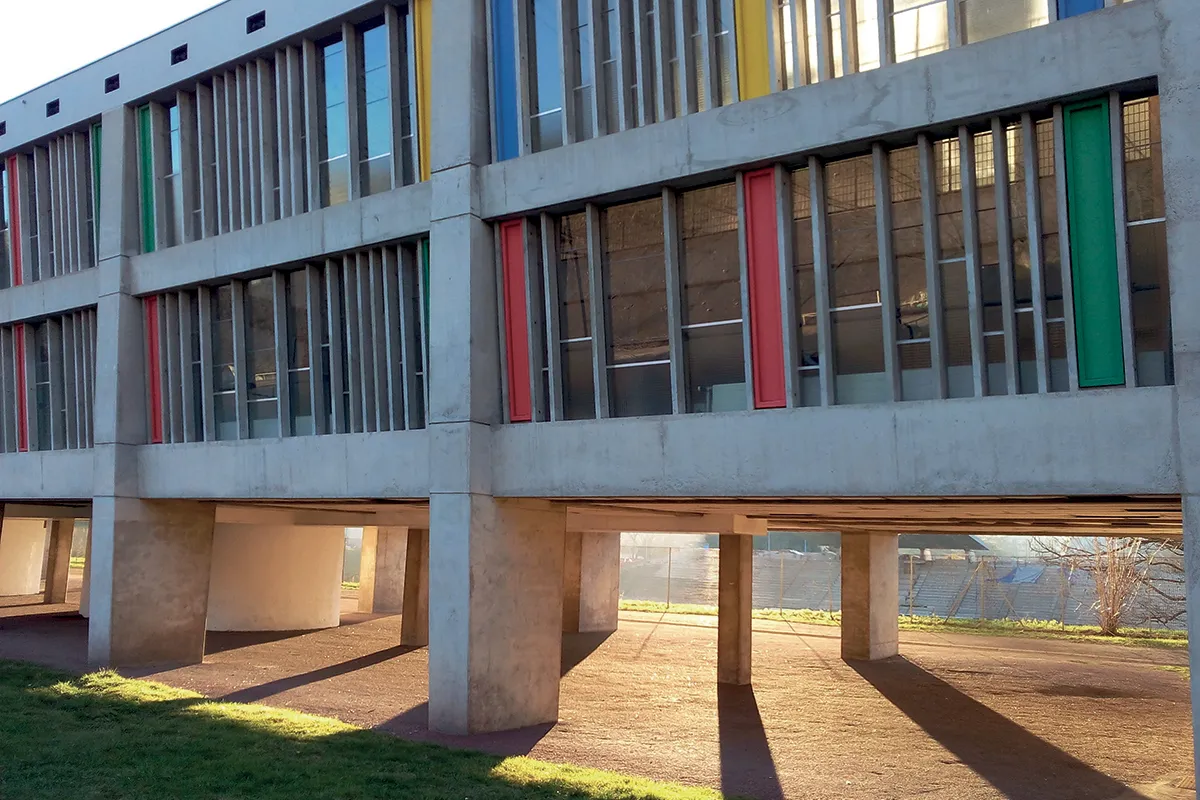
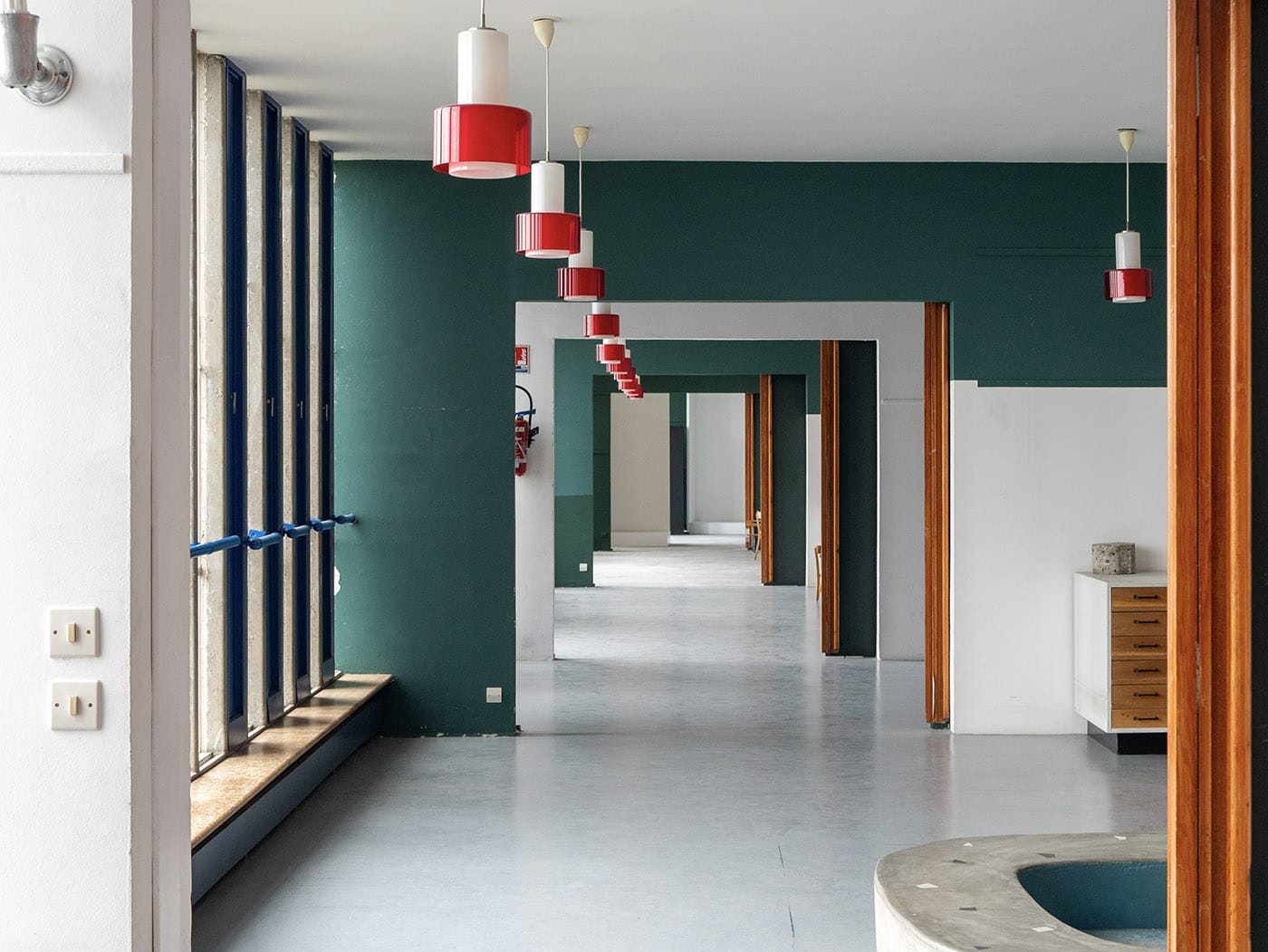
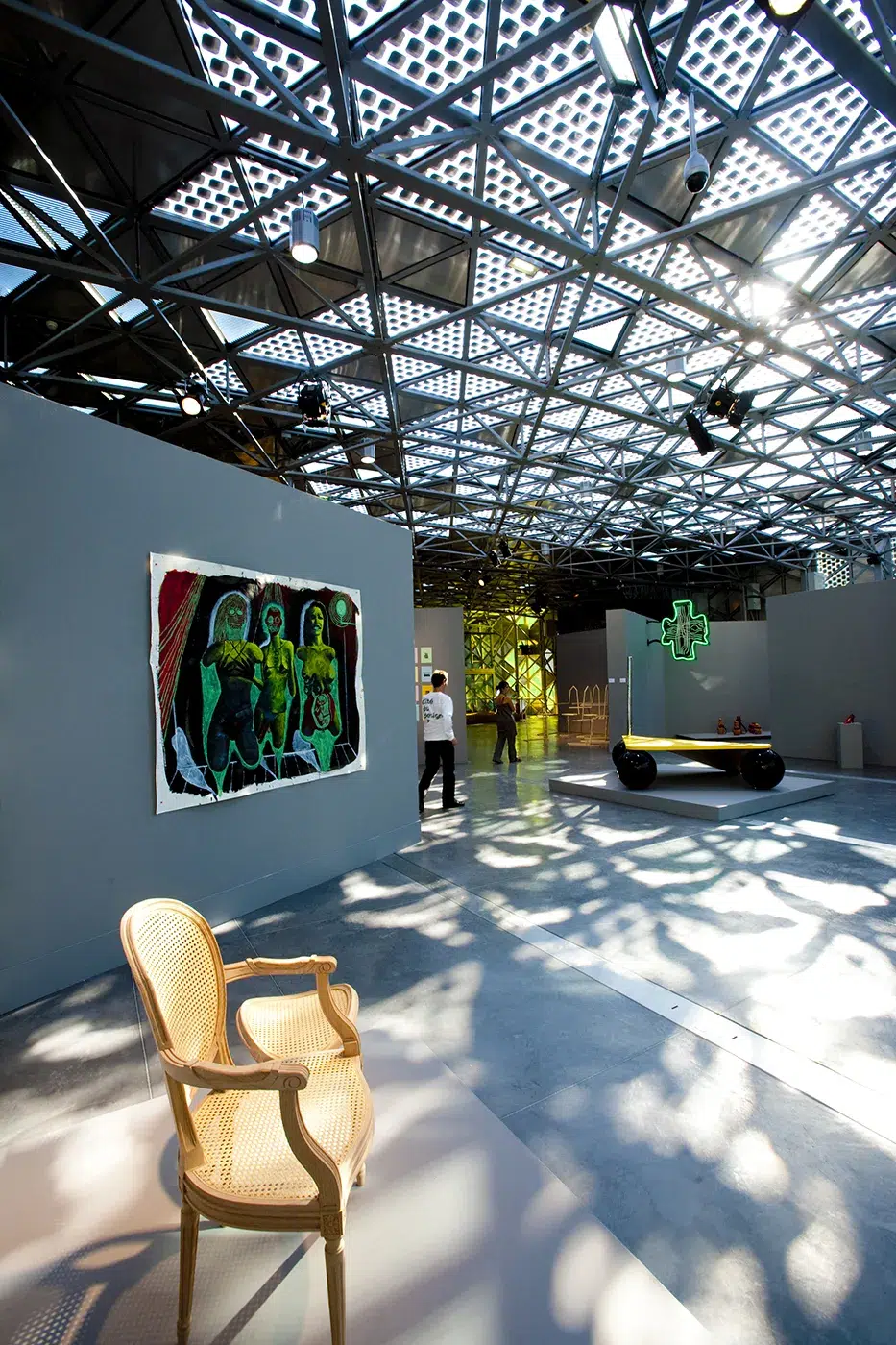
Start your tour at the Maison de la Culture, which opened in 1965. It was the first building the architect designed in Firminy and the only structure on the site completed during his lifetime. Restored between 2009 and 2013, it remains a venue dedicated to performances, artistic creations, workshops, and exhibitions.
Take the time to admire its famous curved roof and the facades punctuated by colorful openings. Inside, design also plays a prominent role. Designer Pierre Guariche created furniture specifically tailored to the Modulor, the system of proportions developed by Le Corbusier based on the dimensions of the human body.
St. Peter's Church: Architecture That Plays with Light
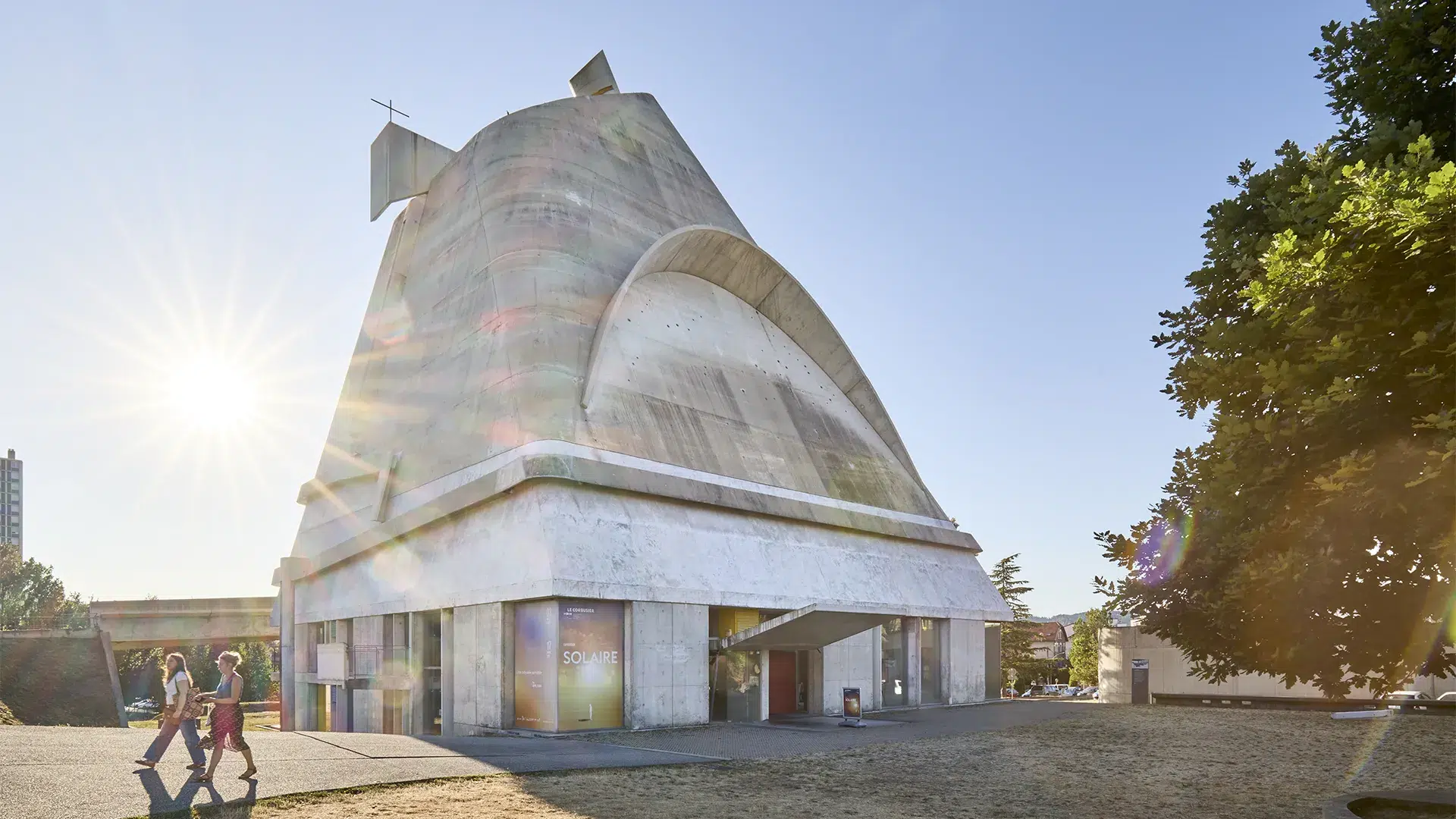
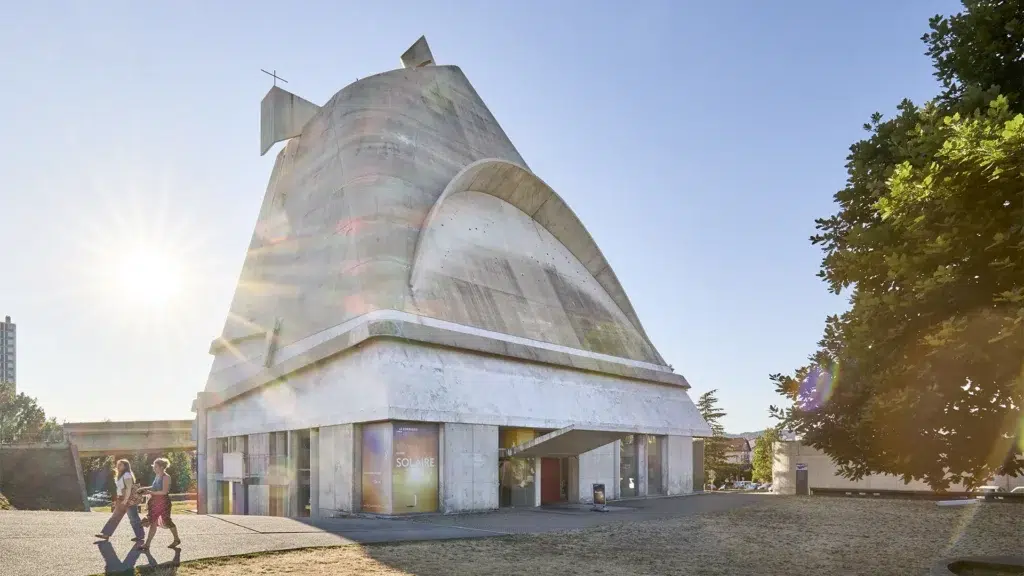
It’s impossible not to notice the Saint-Pierre Church. Designed by Le Corbusier beginning in 1961, it is the final piece of the Firminy-Vert project. After the architect’s death in 1965, his collaborator José Oubrerie continued the project. Construction, which began in 1973, was halted in 1978 before resuming in 2004. The church was finally dedicated in 2006.
Its imposing concrete shell rises to 33 meters in height. But what is most striking once inside is the way light transforms the space. On the east facade, morning light streams through the constellation of Orion, creating a very special atmosphere in the nave. Three “light cannons” also contribute to this natural spectacle.
This is probably one of the best places along the tour to understand that, for Le Corbusier, light is not merely a practical element—it is an integral part of architecture.

The Housing Unit: Entering a “Vertical Village”
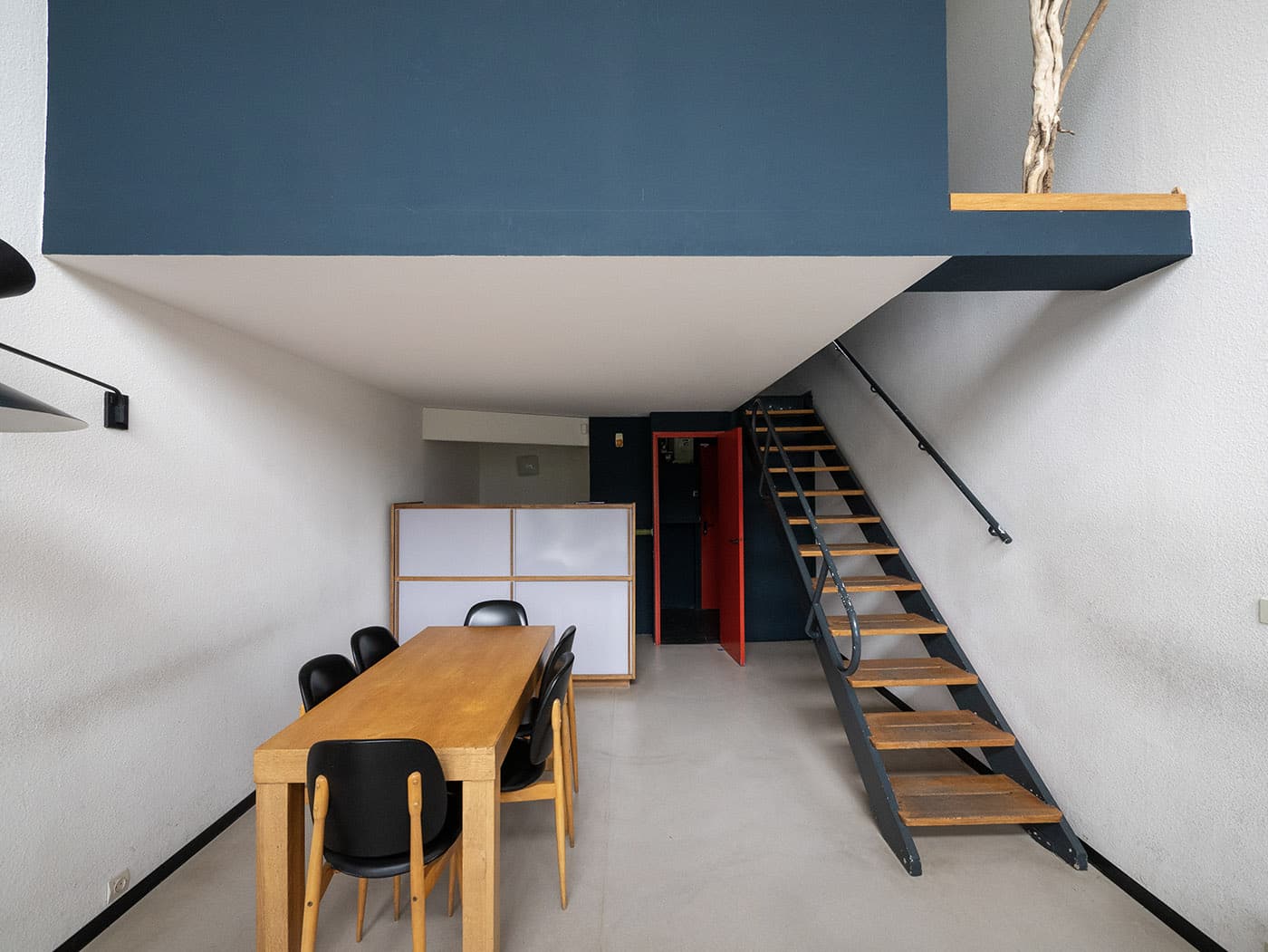
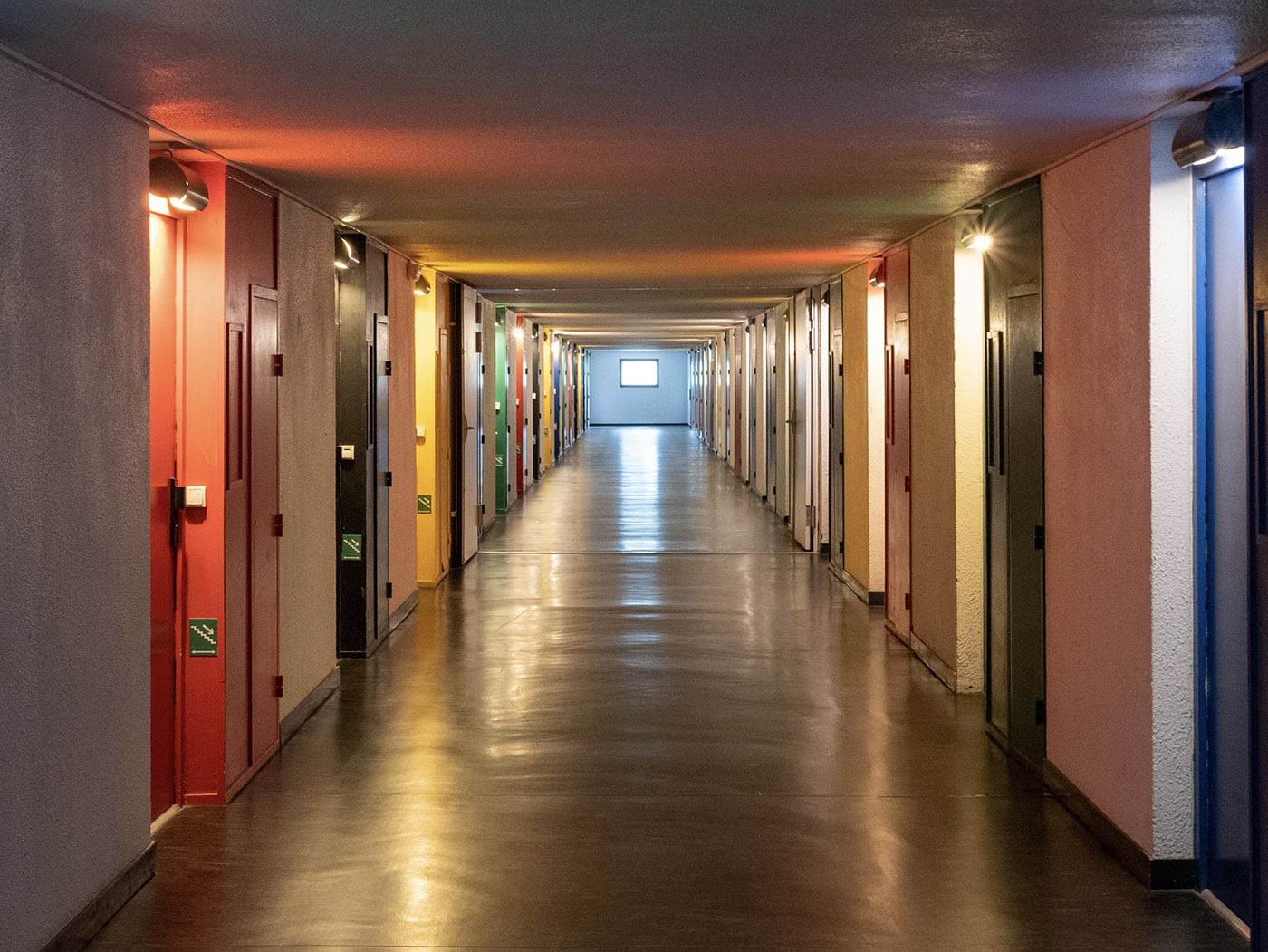
Another major landmark on the site is the Unité d’Habitation. With its 20 stories and 130-meter length, it towers over Firminy-Vert. The building originally contained 414 apartments connected by seven “internal streets” and was designed as a true vertical city, combining housing, services, and communal spaces.
Today, its model apartment offers a hands-on look at this new way of living envisioned by Le Corbusier. A former preschool exemplifies the commitment to designing the neighborhood around the needs of its residents. Like the Site’s other facilities, it is part of this vision of a city where housing, community facilities, education, culture, and living spaces must coexist.
This is a particularly interesting tour for understanding that the Firminy-Vert project was not solely about the aesthetics of the buildings: above all, it was about reflecting on how residents could live together.

An exhibition to check out in 2026: SOLAIRE, a sensory odyssey
If you’re planning this trip in 2026, don’t miss SOLAIRE, a Sensitive Odyssey.
On view through January 17, 2027, this immersive exhibition offers a new way to explore Le Corbusier’s architecture. It takes as its starting point a concept deeply rooted in Le Corbusier’s philosophy: the relationship between architecture and the sun.
An entire day in just a few minutes
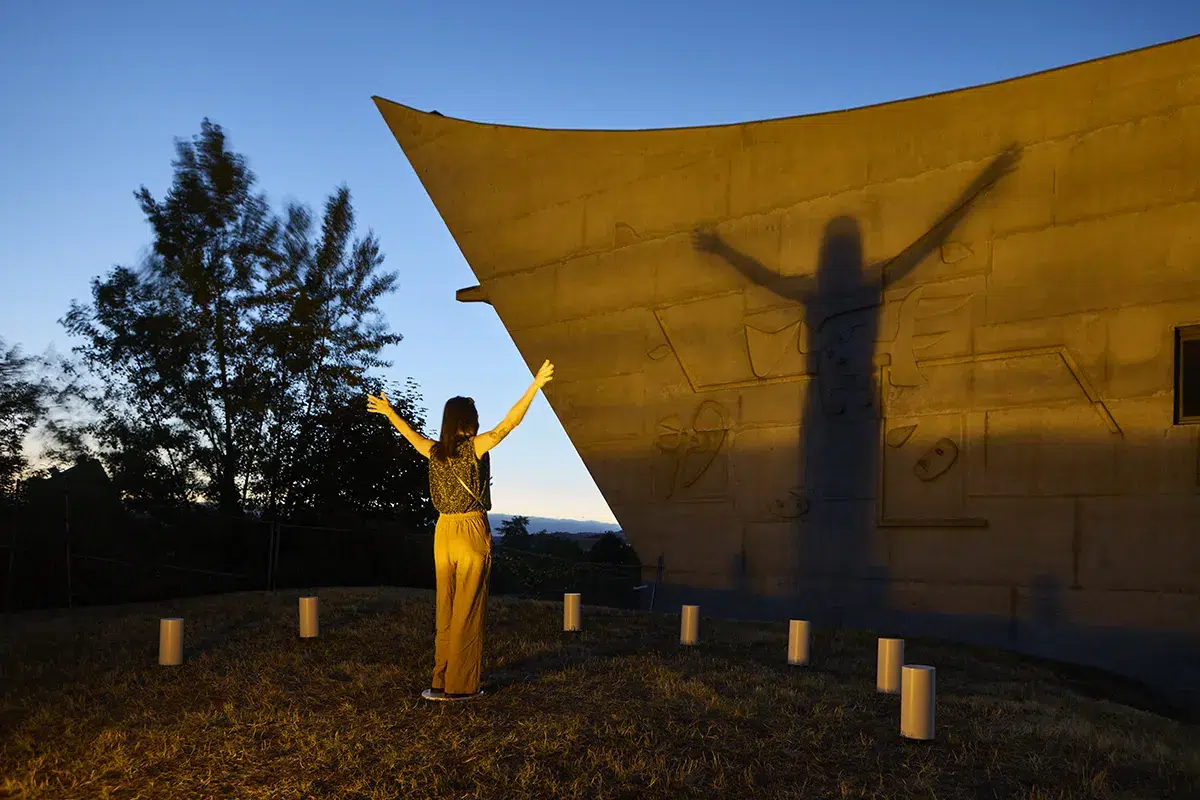
The journey takes place in Saint-Pierre Church and symbolically follows the sun’s path throughout the day. Visitors then pass through different sections that successively evoke dawn, daybreak, noon, twilight, and night. Light installations gradually transform the space and play with the concepts of reflection, diffraction, reverberation, radiance, and darkness.
At the heart of the installation is the gnomon, an ancient instrument used to measure time through the shadow cast by a vertical rod, which has been transformed here into an architectural and luminous object.
The experience thus condenses an entire day into a few minutes: the church’s concrete surface alternately becomes a canvas for light, shadow, and projections.
The visitor becomes part of the artwork
The experience continues at the Maison de la Culture. Facing the south facade, we are invited to stand in the center of a huge sundial. Our own body then becomes the gnomon: our shadow becomes the hand that tells the time.
This is a particularly interesting idea because it directly echoes Le Corbusier’s Modulor, which already placed the human body at the heart of architectural proportions.
Practical information: Rue des Noyers, Firminy
 Every day except Tuesdays, from 10:00 a.m. to 12:30 p.m. and from 1:30 p.m. to 6:00 p.m.
 €8.50, reduced rate €6.50
Extend your visit to Saint-Étienne
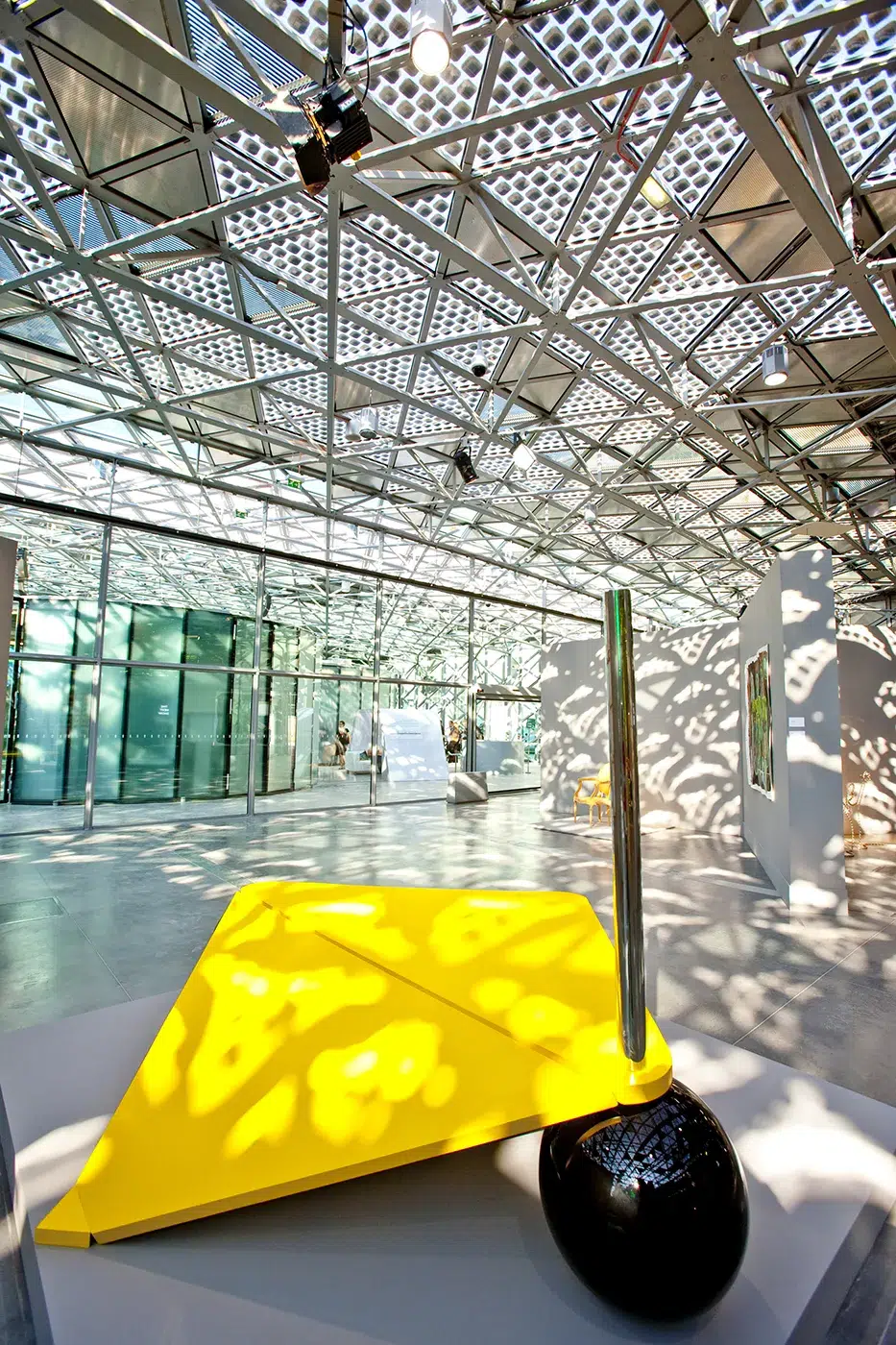
After Firminy, the stage ends in Saint-Étienne, a creative city and the design capital of France.
The city is a natural extension of this exploration of the Le Corbusier Site: it combines industrial heritage, contemporary art, design, street art, and cultural heritage.
In particular, you can continue exploring design and architecture before taking in the city’s atmosphere.
The contrast with the start of the stage is actually quite fascinating: in a single day, we go from the religious and volcanic heritage of Le Puy-en-Velay to a city focused on contemporary art.
How much time should I set aside for this step?
The Grand Tour recommends thinking of each stage as a one-day mini-trip.
But for this leg of the journey between Le Puy-en-Velay and Saint-Étienne, plan on a full day, or even more if you really want to enjoy the Le Corbusier Site.
If you’re passionate about architecture, however, you’d be better off spending more time in Firminy. The guided tours of the Maison de la Culture and the church, or those of the Unité d’Habitation, last about 1 hour and 30 minutes each.
How can you make the most of this leg of the trip?
Above all, don’t treat this leg of the trip as just a simple connection between two cities. The real appeal of the Grand Tour lies precisely in taking the time to stop. The castles, the Loire Gorges, and especially Firminy are all reasons to slow down.
And if you had to choose just one place to visit on this leg of the trip, I would recommend the Le Corbusier Site without hesitation, because in Firminy, you don’t just get to see a few remarkable buildings—you get a true vision of the city and the way of life there.