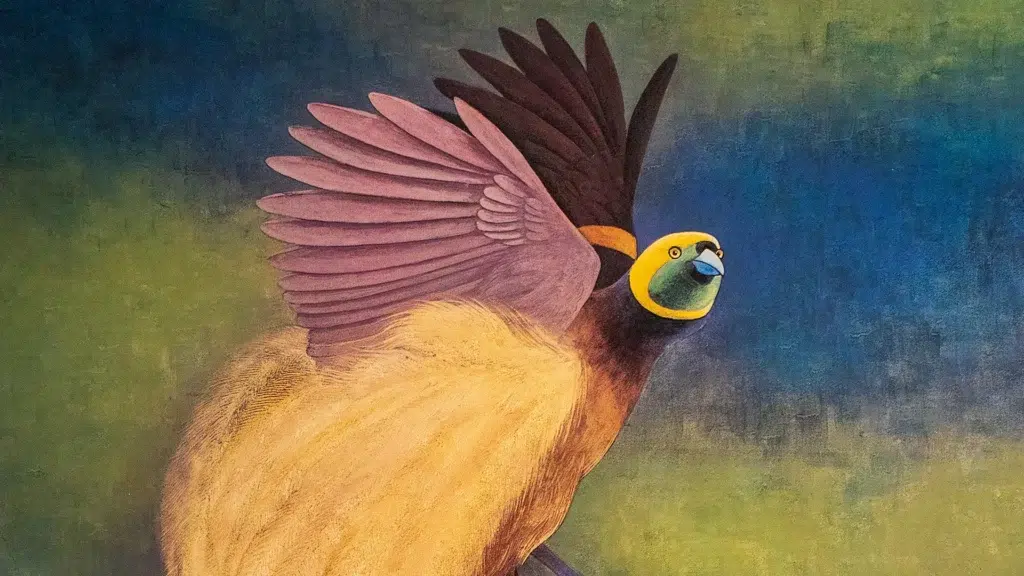

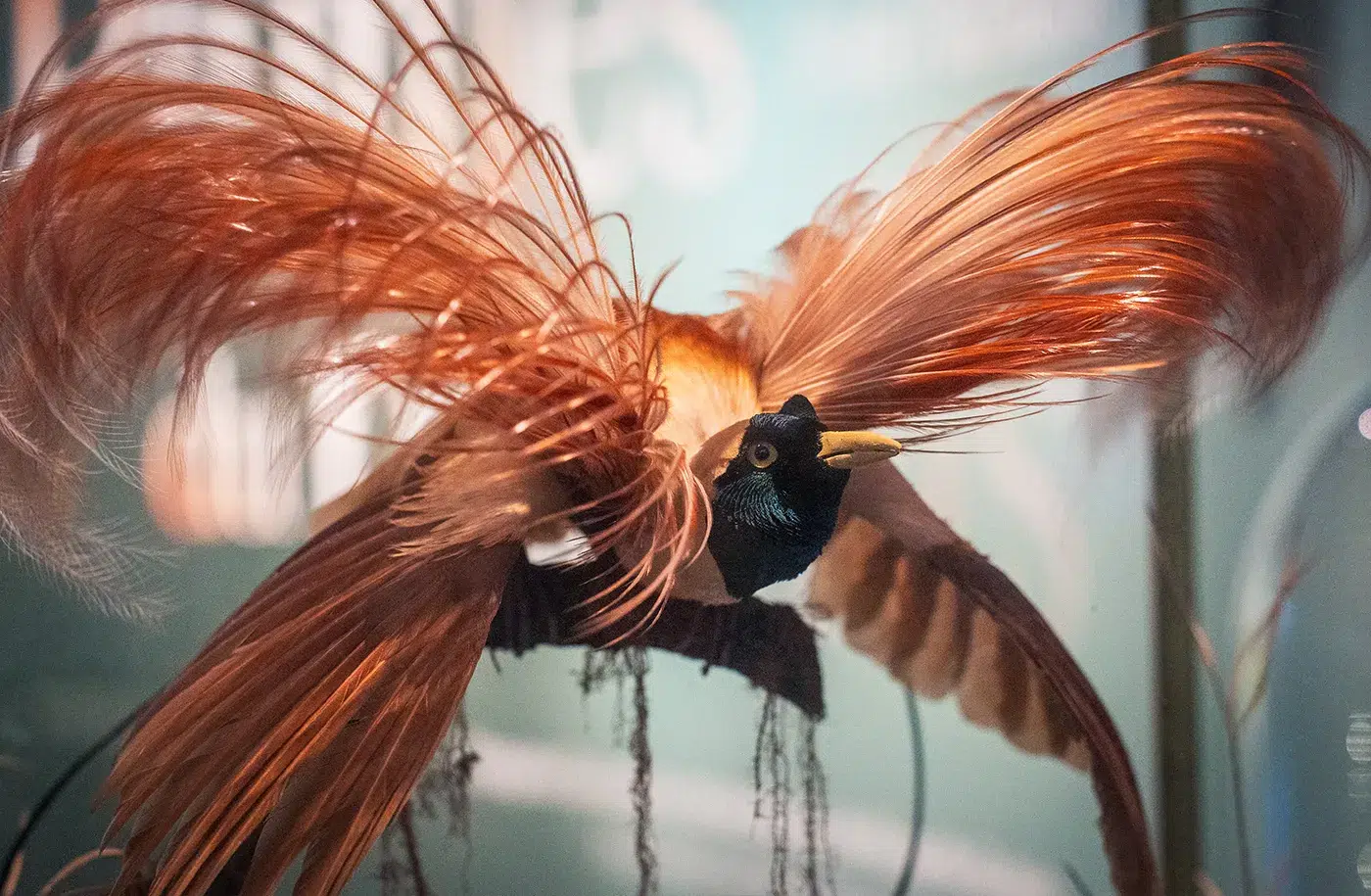
Bright red feathers, deep, dark shapes, black filaments floating in the air: For centuries, the plumage of birds of paradise has been the focus of human fascination, from New Guinea, where they originate, all the way to Europe, where they were perceived as almost supernatural creatures.
With the exhibition Plumes of Paradise, the Quai Branly – Jacques Chirac museum traces the long and fascinating journey of these birds, who fell victim to the trade in their feathers and—through no fault of their own—became the catalyst for one of the first animal protection leagues and a feminist movement.
What is a bird of paradise?
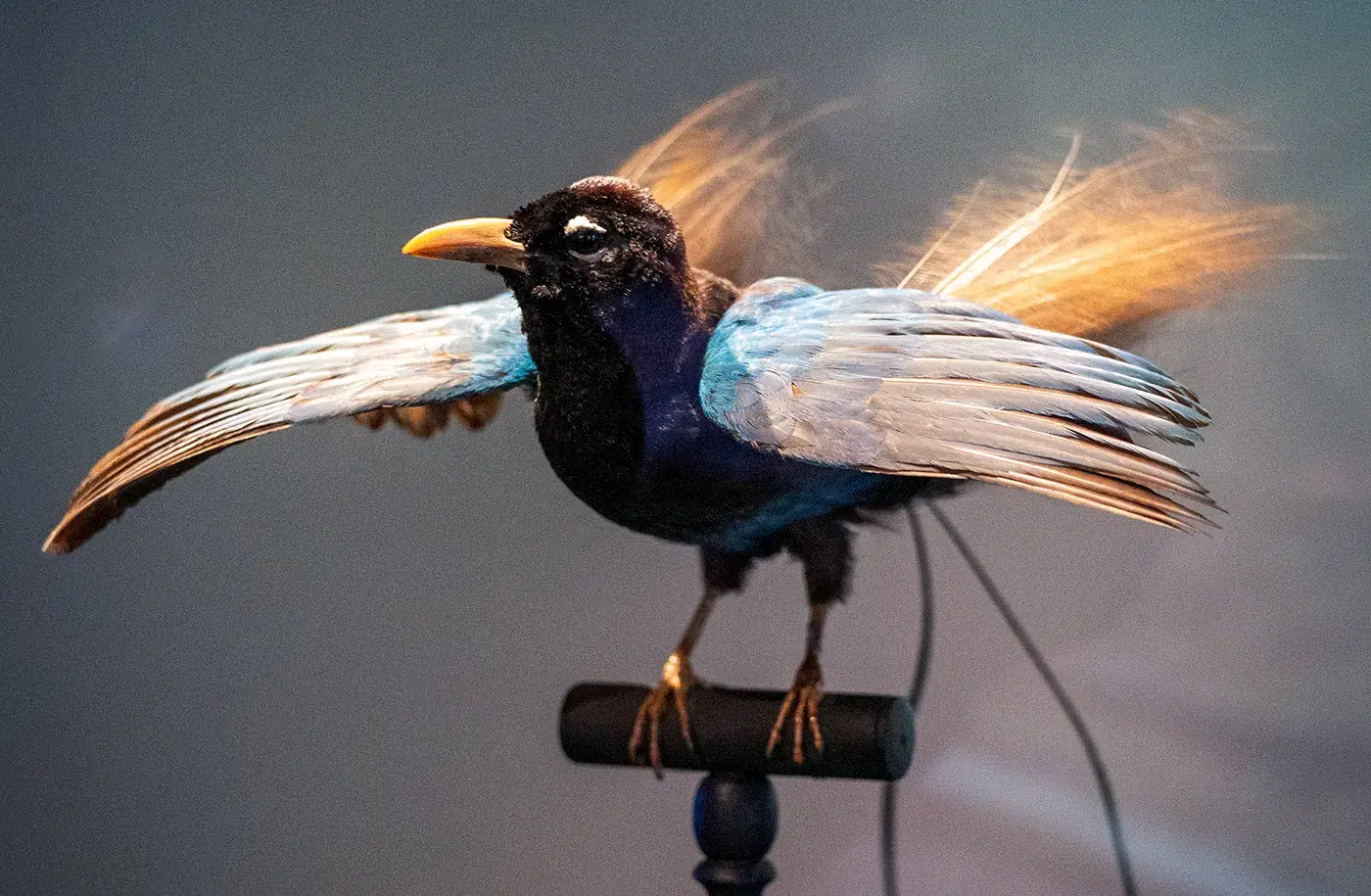
The birds of paradise comprise a family of 45 species found primarily in New Guinea. They are characterized by vibrant plumage and unparalleled displays.
Birds at the Heart of New Guinea’s Cosmologies
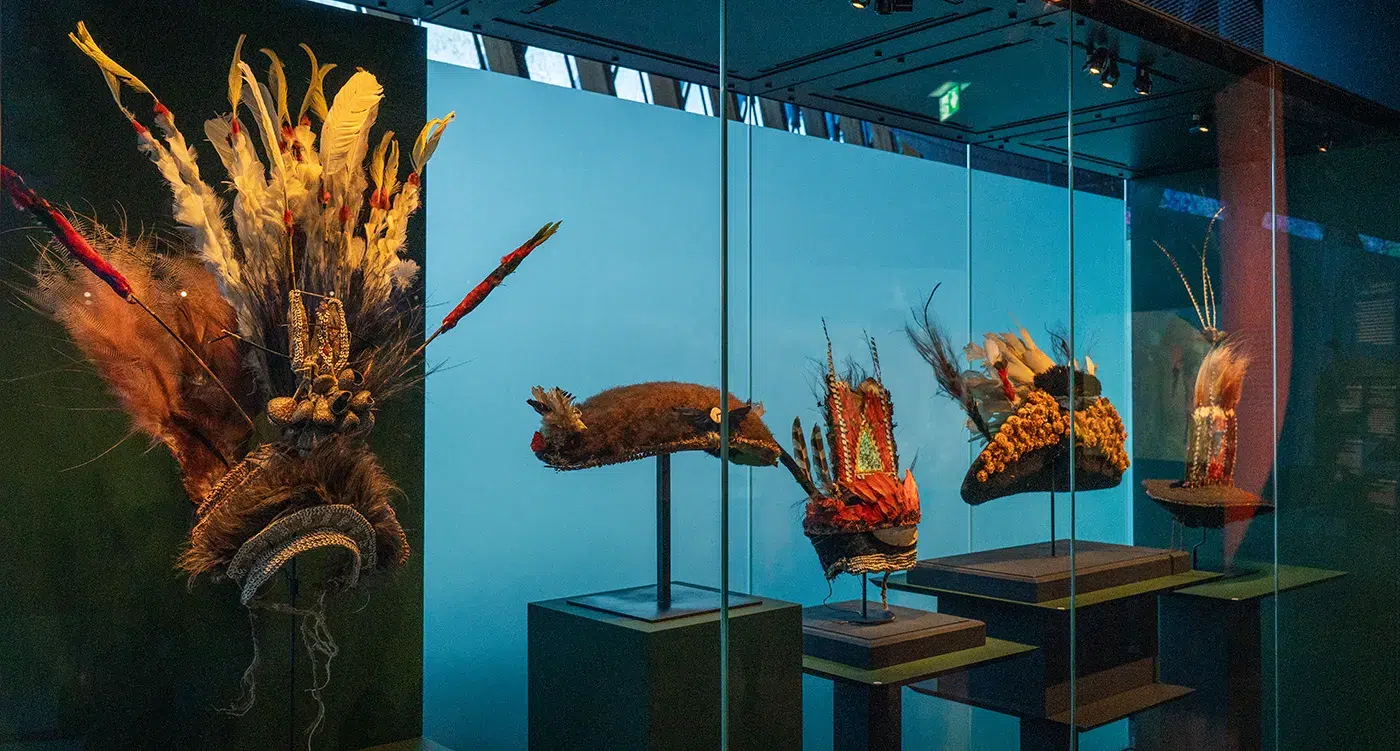
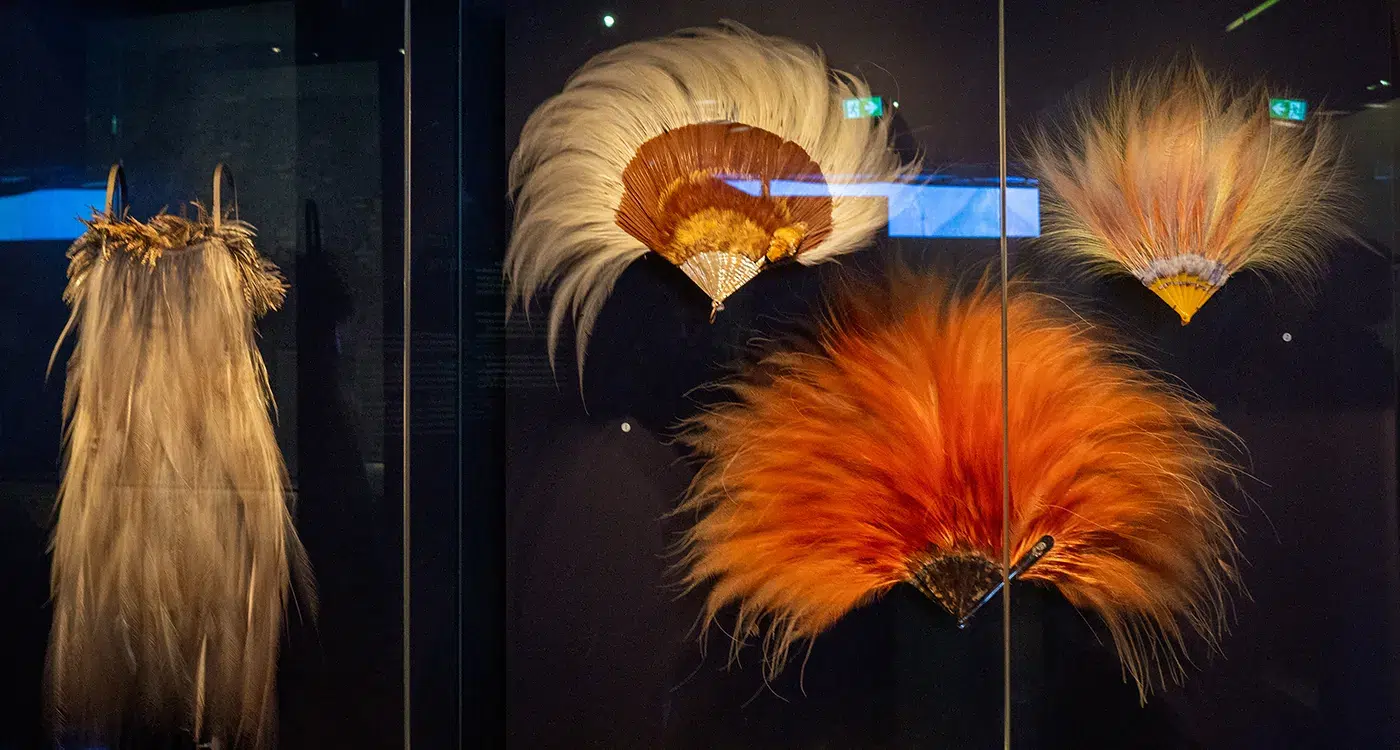
In many regions of New Guinea, bird-of-paradise feathers are used in ceremonies, dances, and communal gatherings. Mounted on spectacular headdresses or worn on the body, they sometimes indicate social status, group membership, or the role played during rituals. Certain ornaments, composed of dozens of carefully assembled feathers, also reflect trade networks between communities.
Braided plant fibers, shells, pigments, and feathers come together to form ensembles in which each element holds a specific meaning. These adornments, crafted with the utmost care, appear as much as works of art as they do as objects connected to social and spiritual life.
How Birds of Paradise Captivated Europe
The first accounts from the great explorations
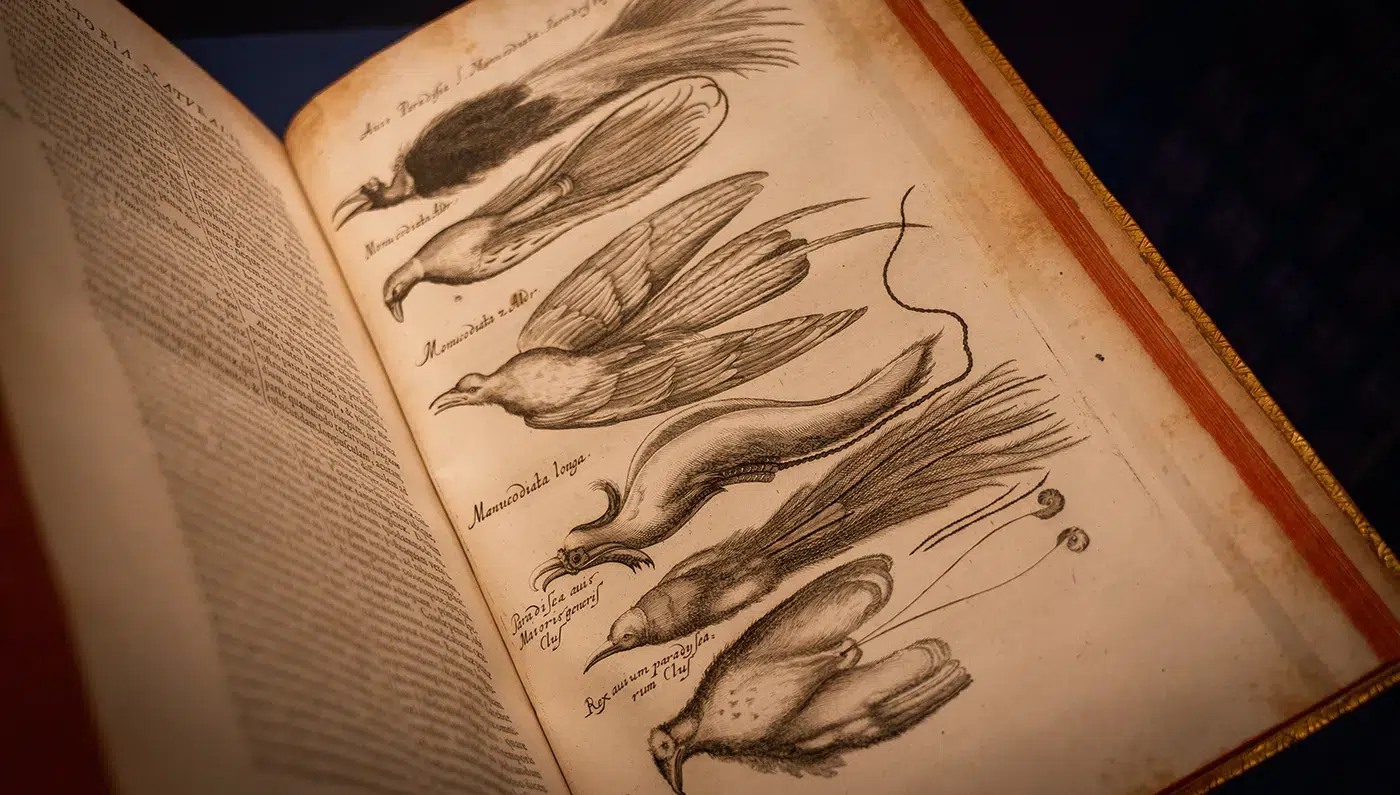
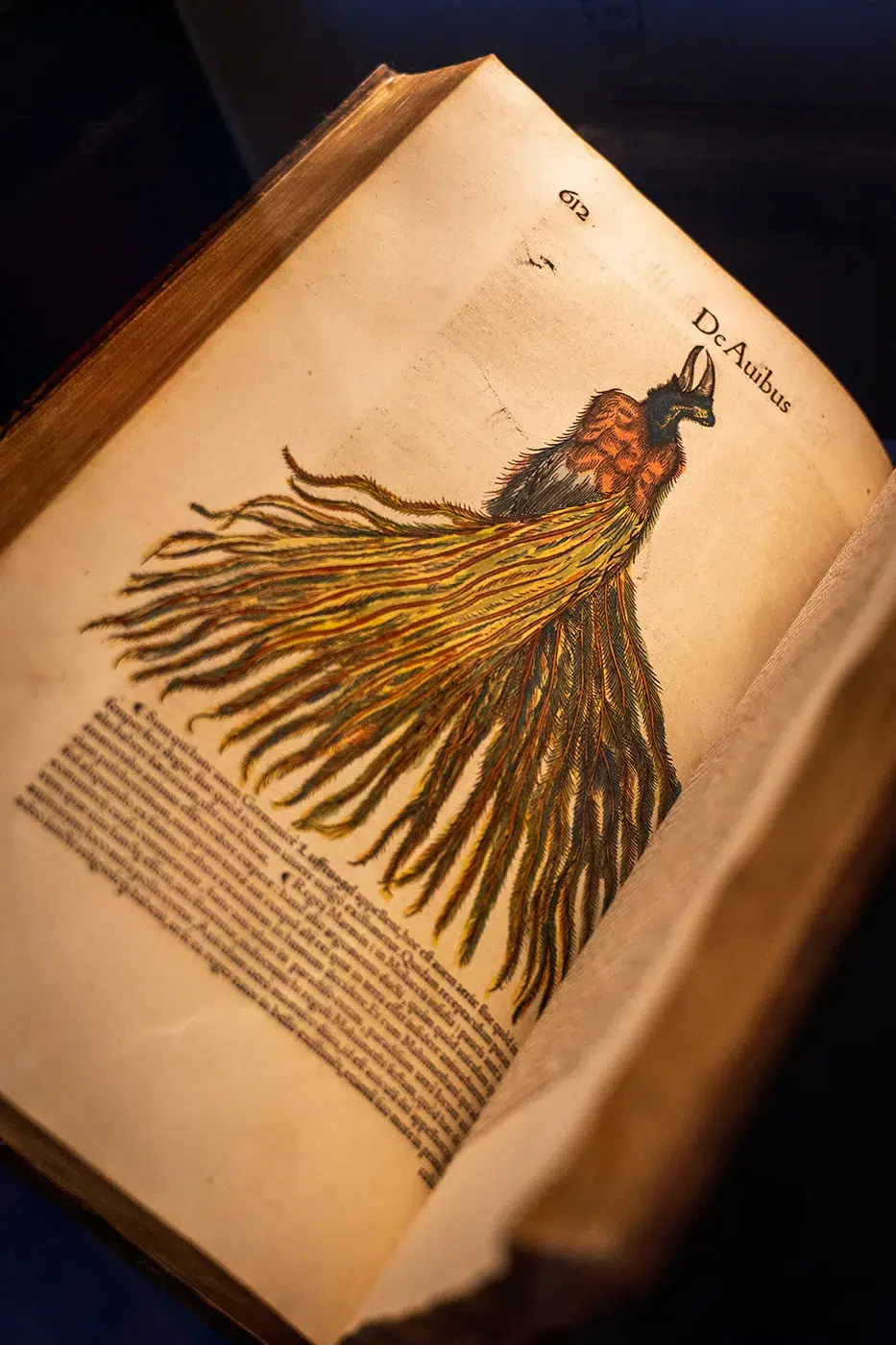
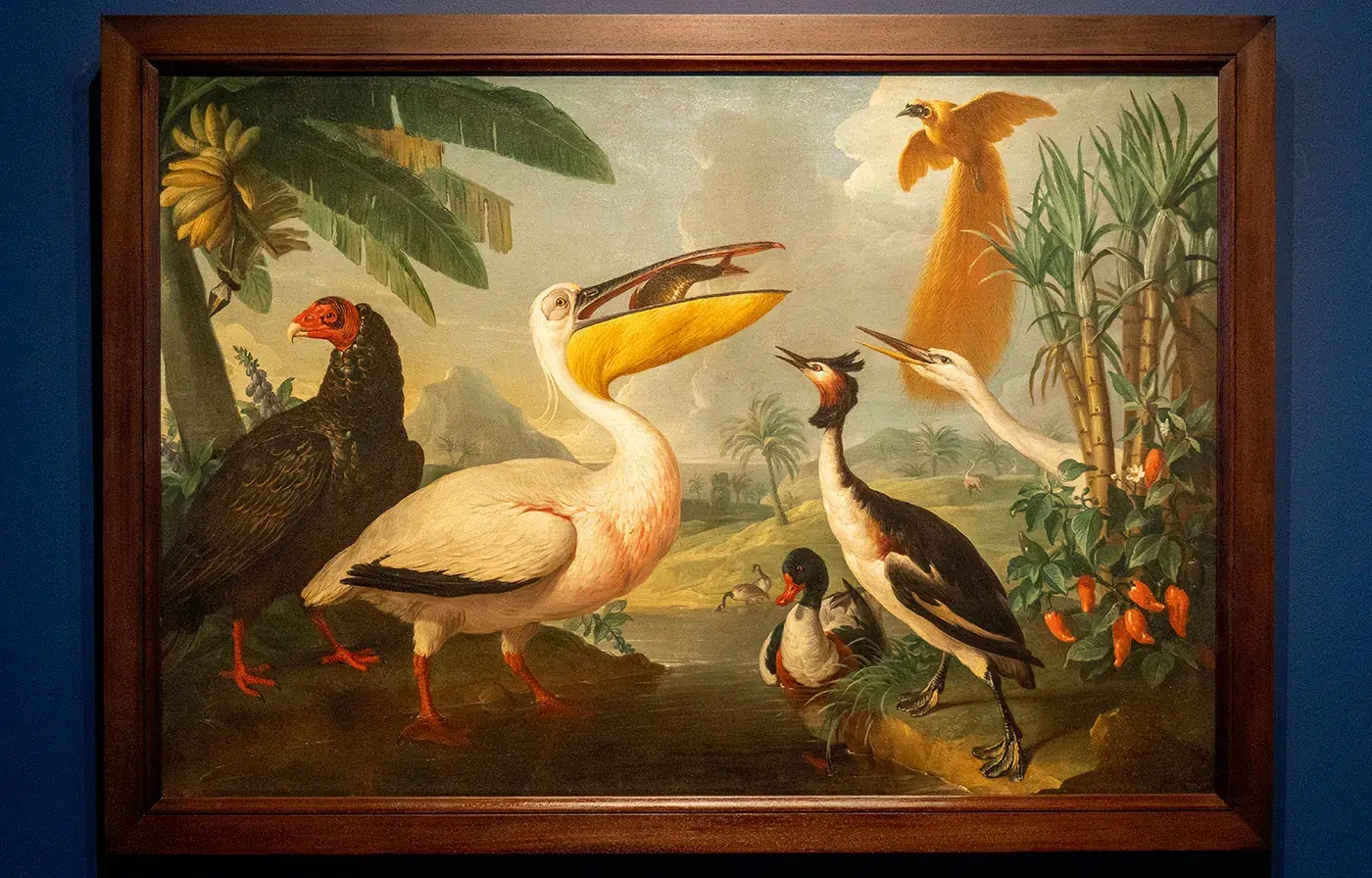
Starting in the 16th century, the first birds of paradise began to appear in Europe. Often brought to the continent without their legs—which had been removed during preparation—birds of paradise were at the center of a surprising belief: that they were animals that lived permanently in the air and never touched the ground.
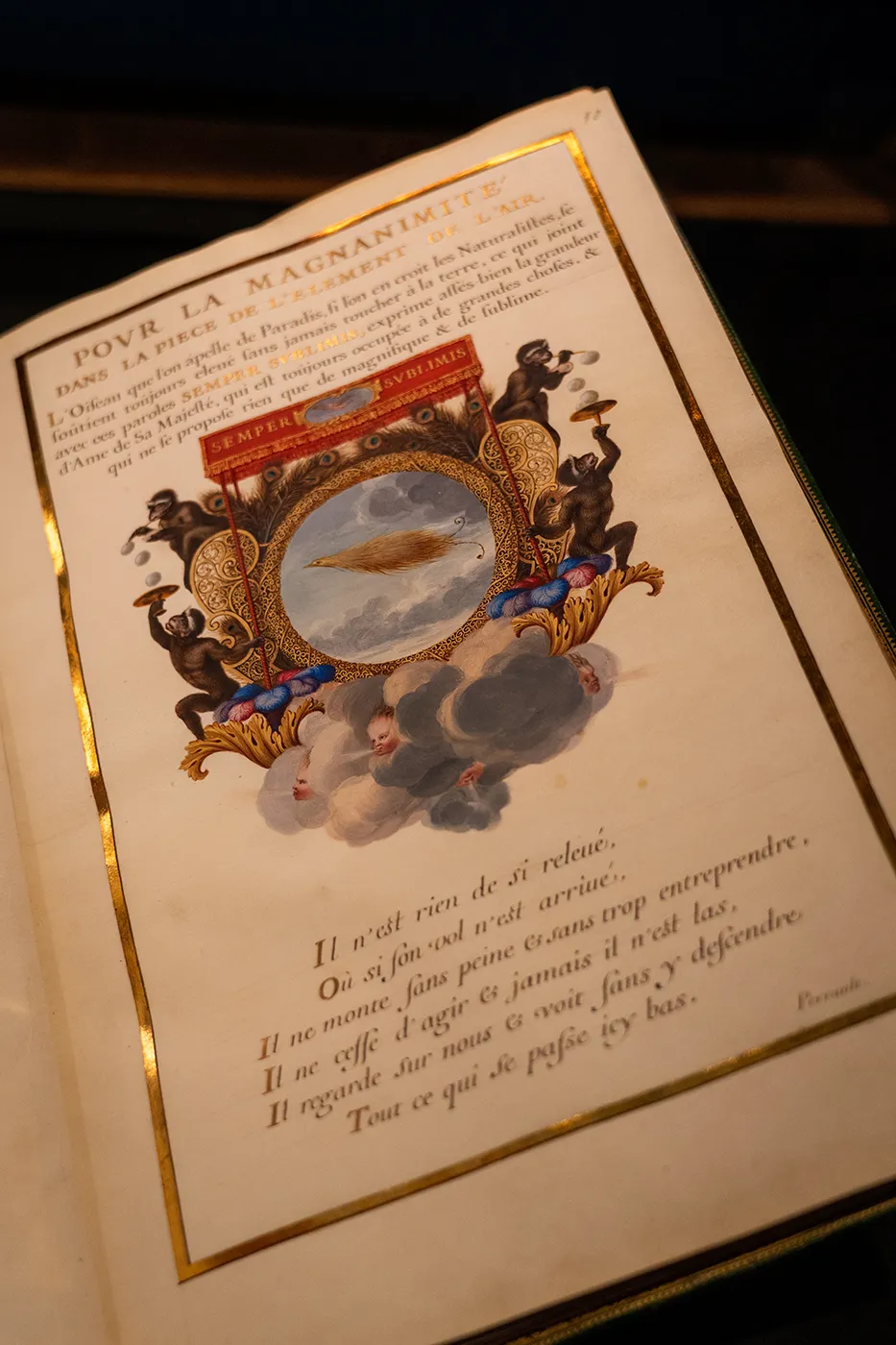
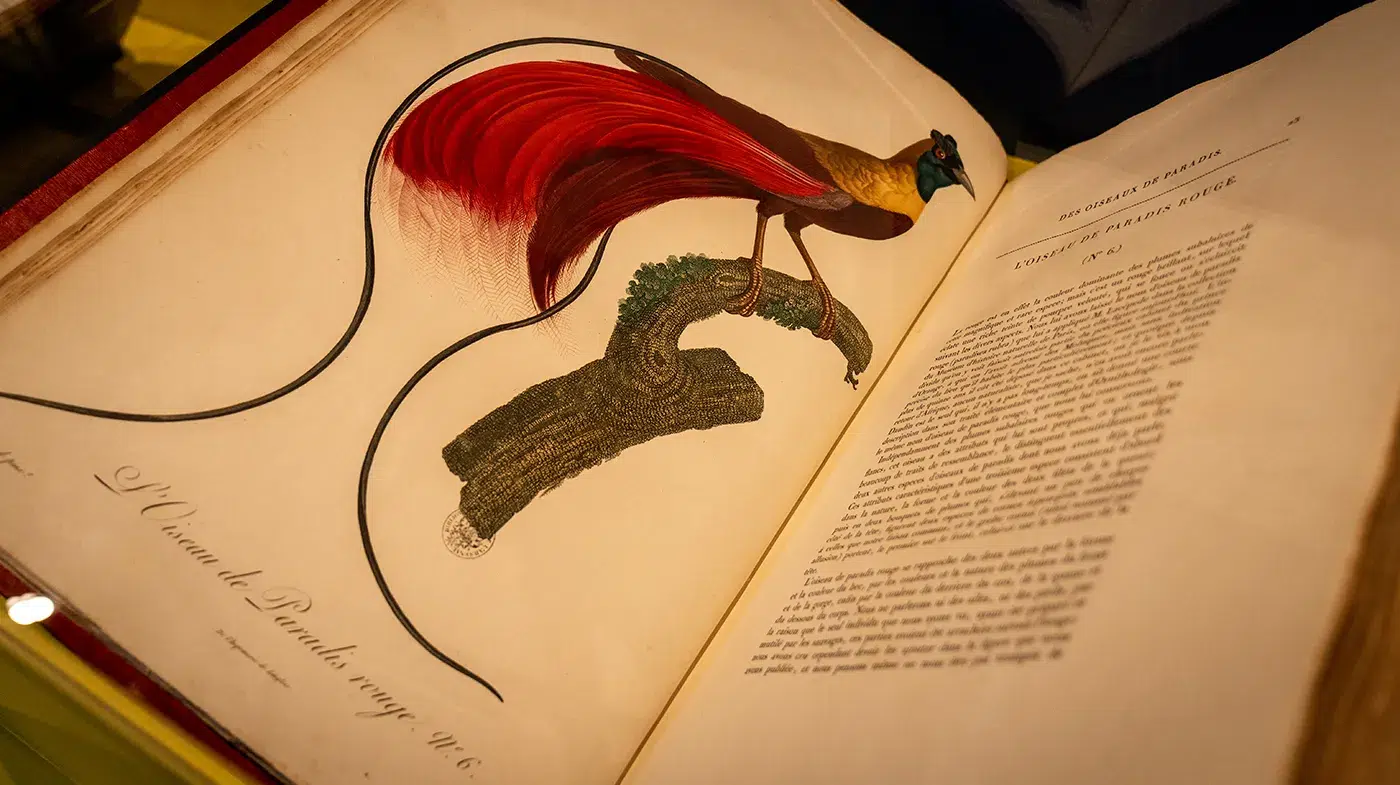
Over time, both naturalists and artists have expanded their knowledge of these animals. Scientific drawings, paintings, and illustrations have spread their images throughout Europe, sometimes accurately, sometimes highly embellished.
Through old engravings, travelogues, and taxidermied specimens, the exhibition traces this gradual discovery that captivated Europe. In particular, it explores how these birds came to be seen as symbols of exoticism and an idealized nature, straddling the line between scientific observation and the imagination of “paradise.”
A rare collector's item
Over the centuries, feathers and specimens found their way into cabinets of curiosities and later into European natural history collections. Birds of paradise became highly sought after, both for their rarity and their appearance.
Some display cases echo the aesthetic of earlier collections, where taxidermied specimens, precious objects, and scientific documents were displayed side by side.
When feathers become a fashion trend
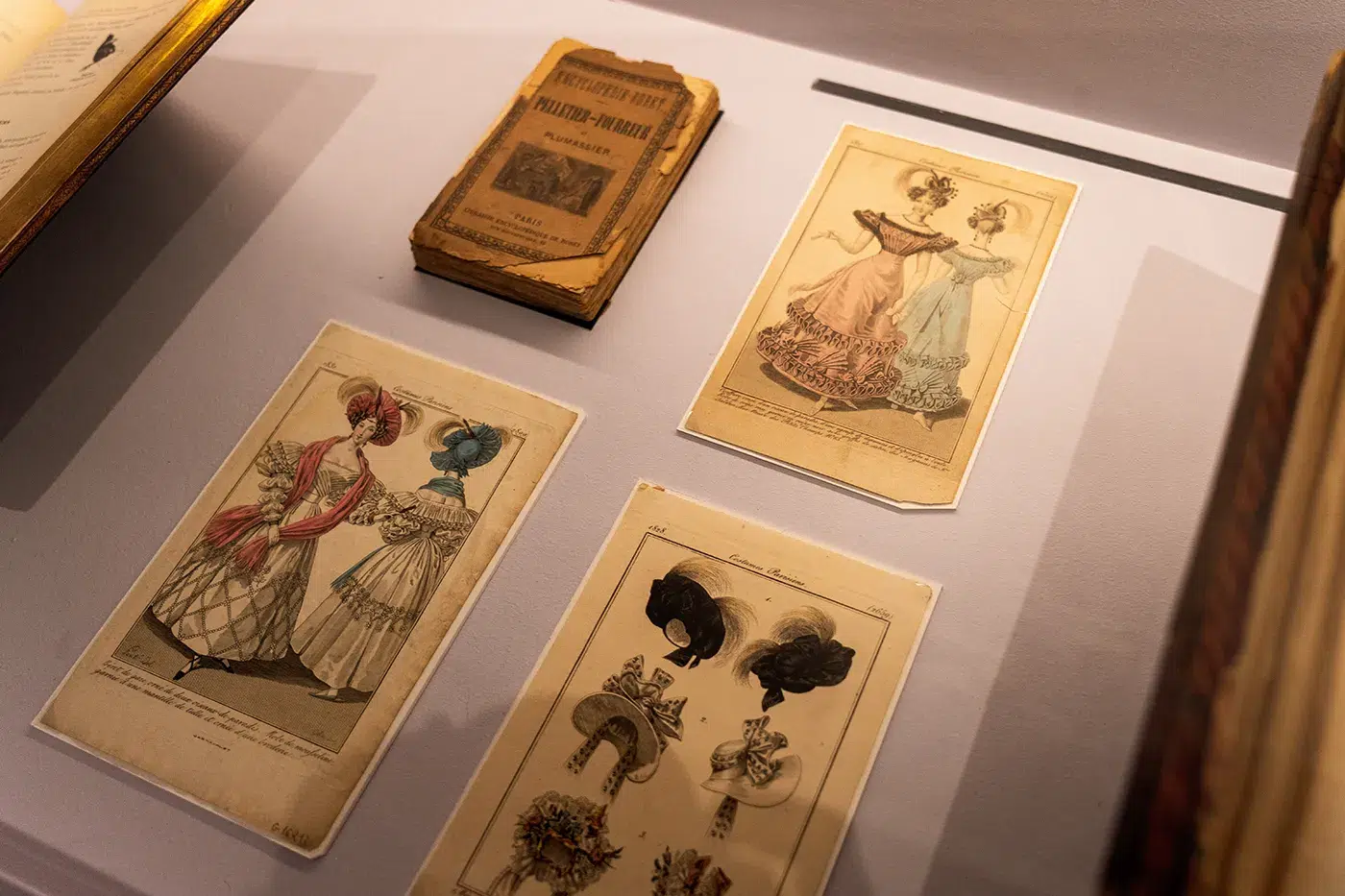
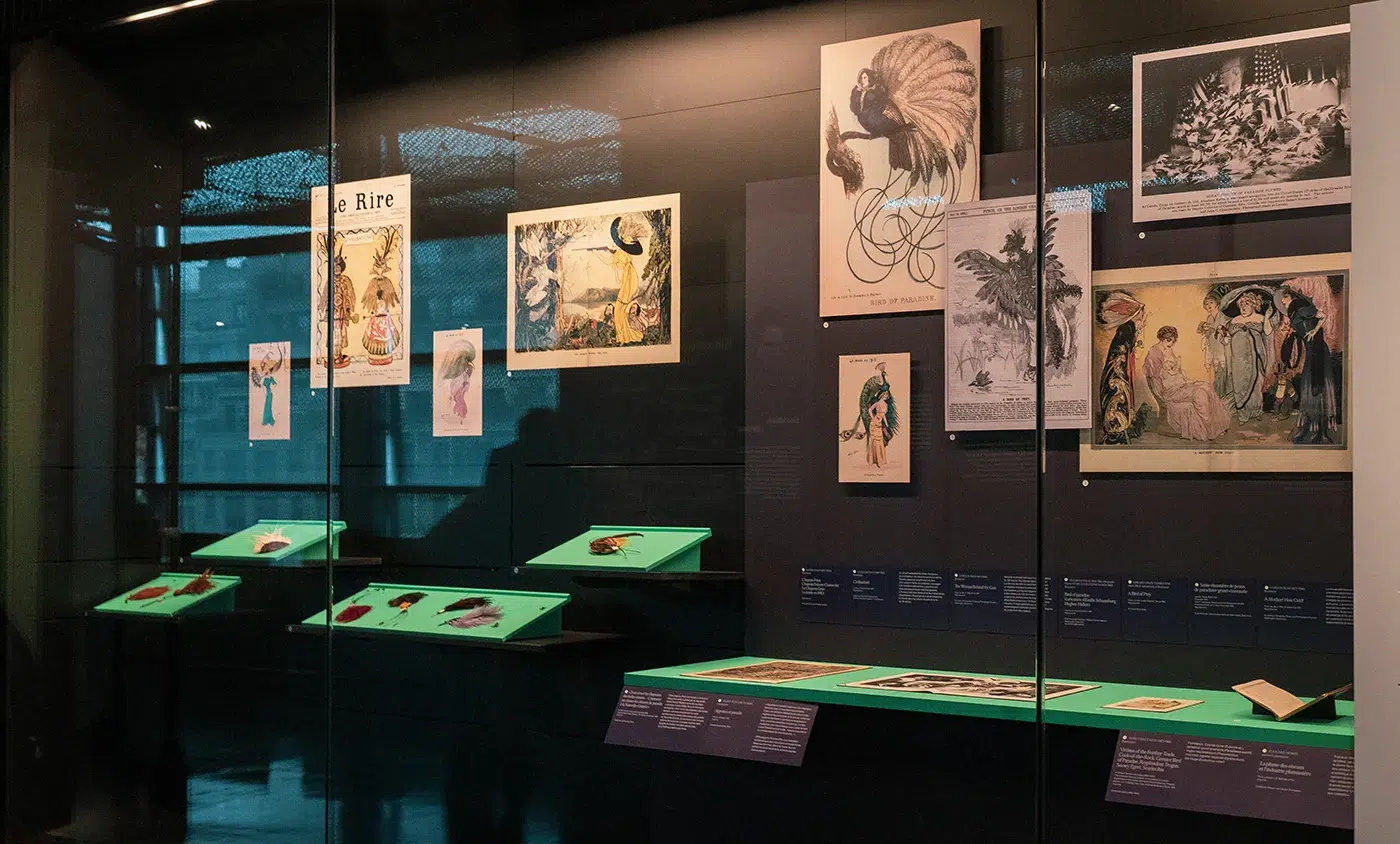
Worn on hats, dresses, or accessories, bird-of-paradise feathers became, by the end of the 19th century, symbols of elegance and social distinction. Photographs, fashion illustrations, and period pieces demonstrate the extent of this trend in European capitals.
Behind this trend lies a particularly lucrative international trade. Birds are hunted in large numbers to supply European and American markets, while feathers are shipped between colonies, trading ports, and fashion workshops.
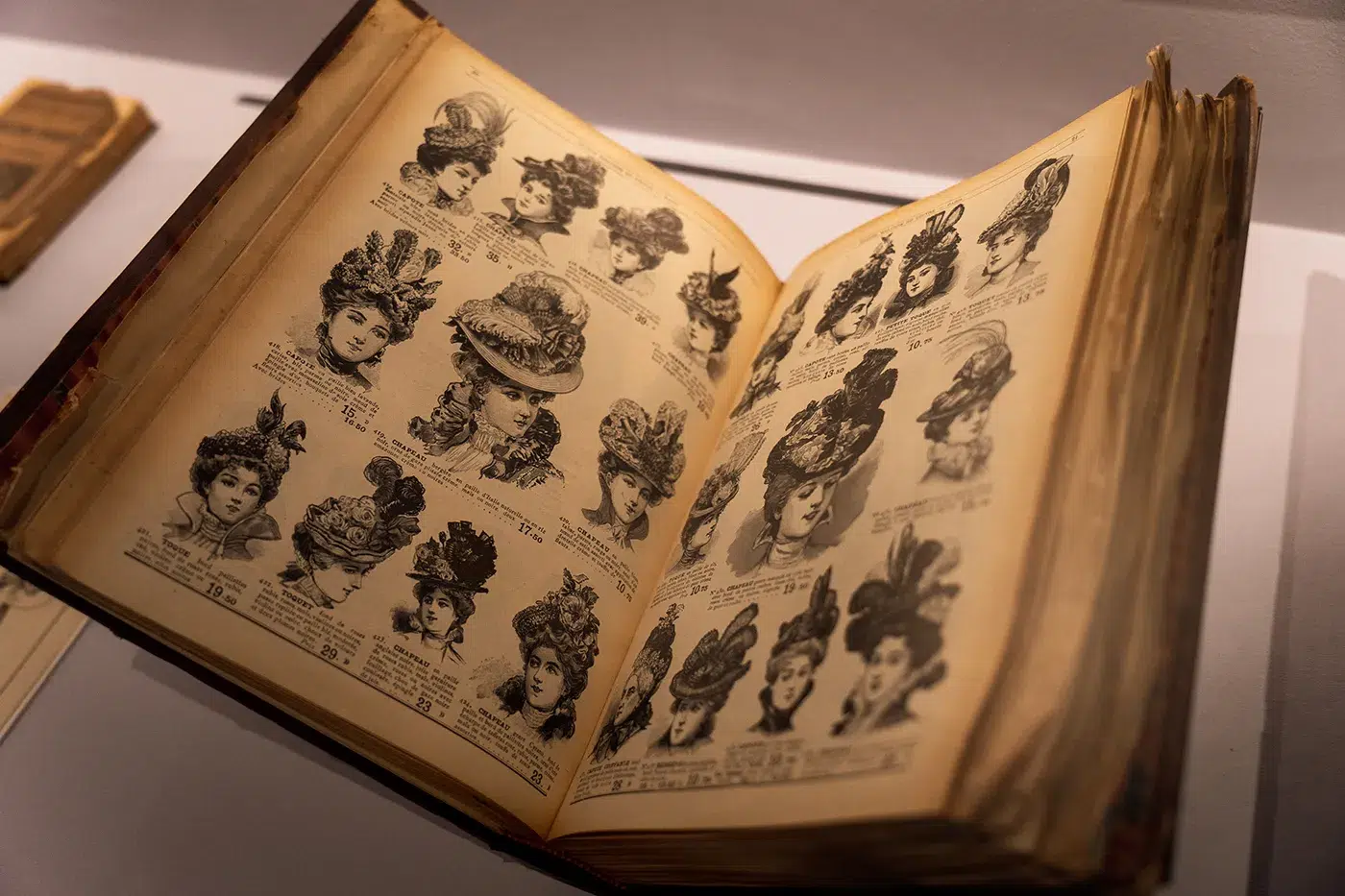
Paris: A City at the Heart of the Feather Industry
With the fascination of the luxury industry, the entertainment world, and haute couture for bird-of-paradise feathers, the feather was at the heart of an economy. In Paris alone, during the first quarter of the 20th century, there were hundreds of feather workshops, suppliers, milliners, department stores, fashion houses, taxidermists, centers of learning, and entertainment venues that provided livelihoods for thousands of people.
The Disappearance of Birds: The Hidden Side of Elegance
Gradually, the dwindling numbers of certain species are causing concern. Attitudes toward birds of paradise are changing, and the first criticisms of the feather trade are beginning to emerge.
In the early 20th century, animal welfare organizations began to organize, and the debate gradually entered the public sphere. This marked the emergence of the first animal welfare movements, in a context that still resonates with today’s environmental debates.
Women such as the opera singer Lilli Lehmann, the ornithologist Florence Merriam Bailey, and the Duchess of Portland, Winifred Cavendish-Bentinck, played a leading role in these movements. While feathered hats dominated Belle Époque fashion, activists chose to boycott these accessories and publicly spoke out against bird hunting.
An exhibition that addresses current social issues
By linking colonial history, global trade, and species extinction, this exhibition offers a broader and highly relevant exploration of how societies transform, exploit, or protect living organisms.
A bird that has become the symbol of New Guinea
The bird of paradise has become the national emblem of New Guinea, to the point that it has appeared on the country’s flag since 1971.
Even today, many artists draw inspiration from birds of paradise to create works of art and raise public awareness about the vulnerability of these birds and their habitats, which are at risk of disappearing.
The inclusion of numerous contemporary perspectives in the exhibition (photographs, drawings, street art, etc.) thus places the bird of paradise at the heart of a living history, far removed from the static image of an ethnographic museum.
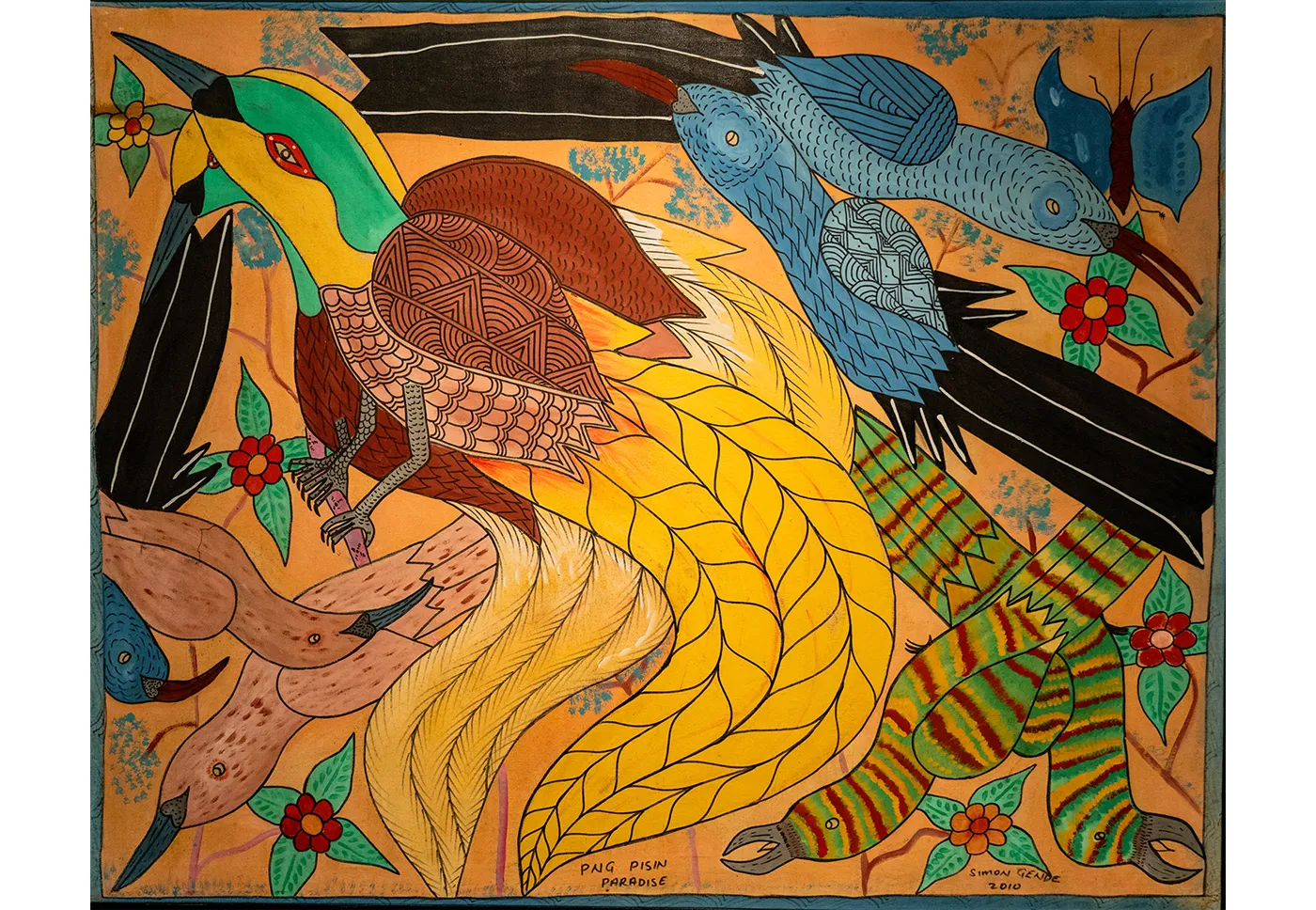
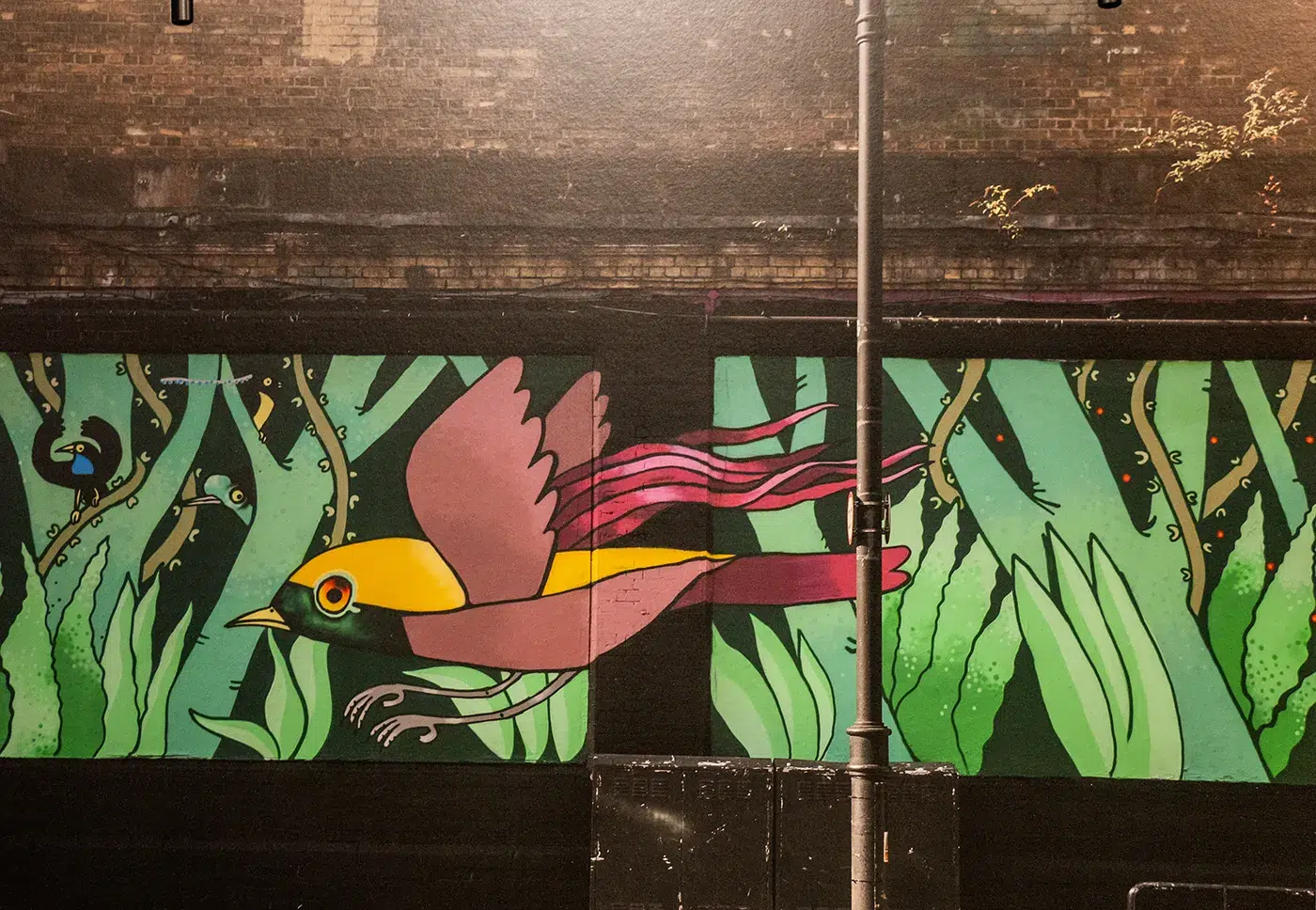
An exhibition conceived as a visual journey
The exhibition creates an immersive atmosphere. In the darkness, the sounds of birds echo as a video showing the courtship dances of birds of paradise welcomes visitors. Lighting effects highlight the feathers, textures, and colors, while the different shades used on the walls reflect changes in era and setting as visitors move through the exhibition. The exhibition follows a chronological progression that makes it easy to understand how perceptions of birds of paradise have evolved over time.
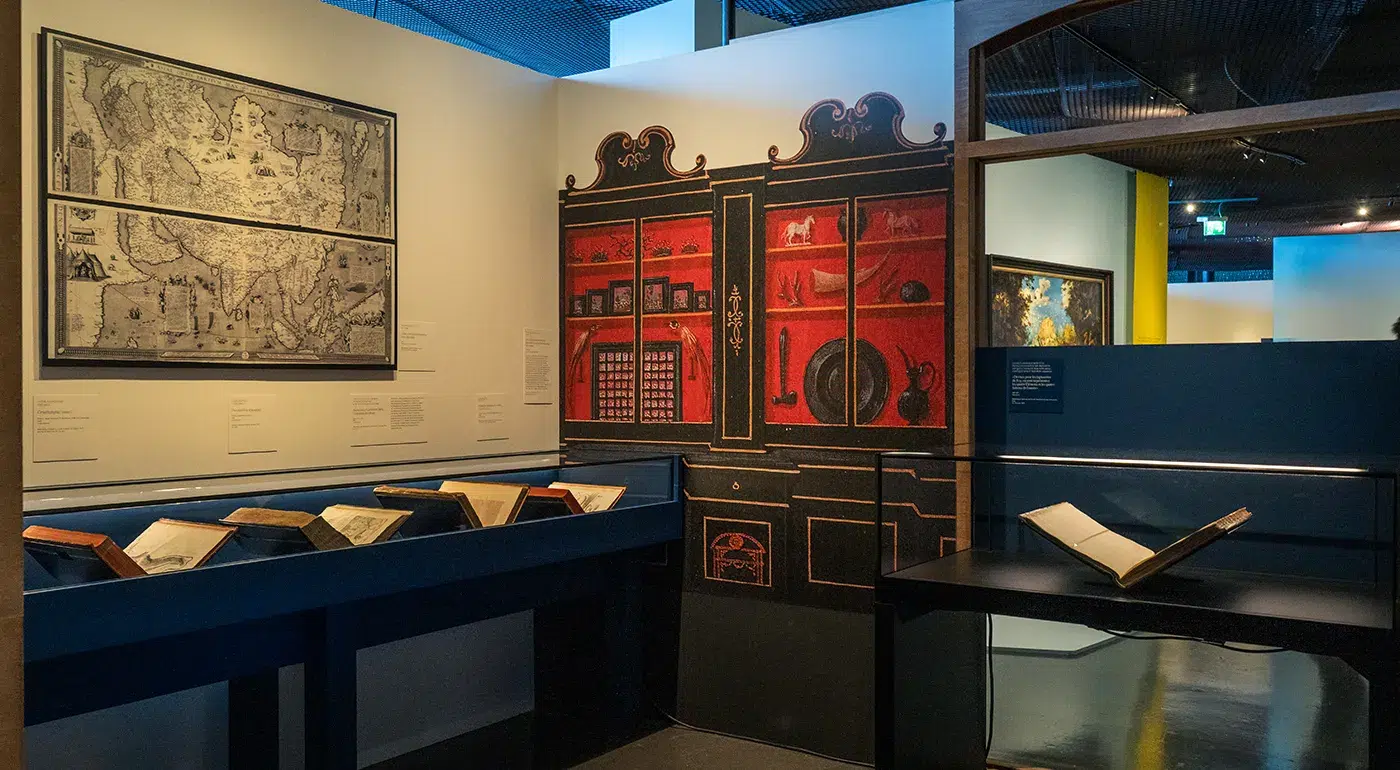
Moving between these spaces feels like traveling through several different worlds: a rainforest, scientific collections, or fashion studios.
As visitors move from display case to display case, the exhibition never limits itself to a single perspective: birds are presented as animals, spiritual symbols, subjects of scientific study, and sources of artistic inspiration. This diversity helps us understand how their image has circulated and evolved over the centuries.
Feathers of Paradise ultimately tells the story of birds as much as it does that of humans. Behind the colorful feathers and travel stories lie broader questions: the fascination with rarity, the desire to collect, the exploitation of living creatures, and the way societies construct their imaginations around nature.
Action!
The Musée du Quai Branly – Jacques Chirac is also presenting a film series in conjunction with the exhibition:
- Thursday, June 11, 7:00 p.m. to 9:45 p.m., *Guardians of the Forest: Time for Solutions* (2023), by Marc Dozier
- Saturday, October 17, 4:00 p.m. to 6:40 p.m. *La Vallée* (1972), directed by Barbet Schroeder
Practical information
Address
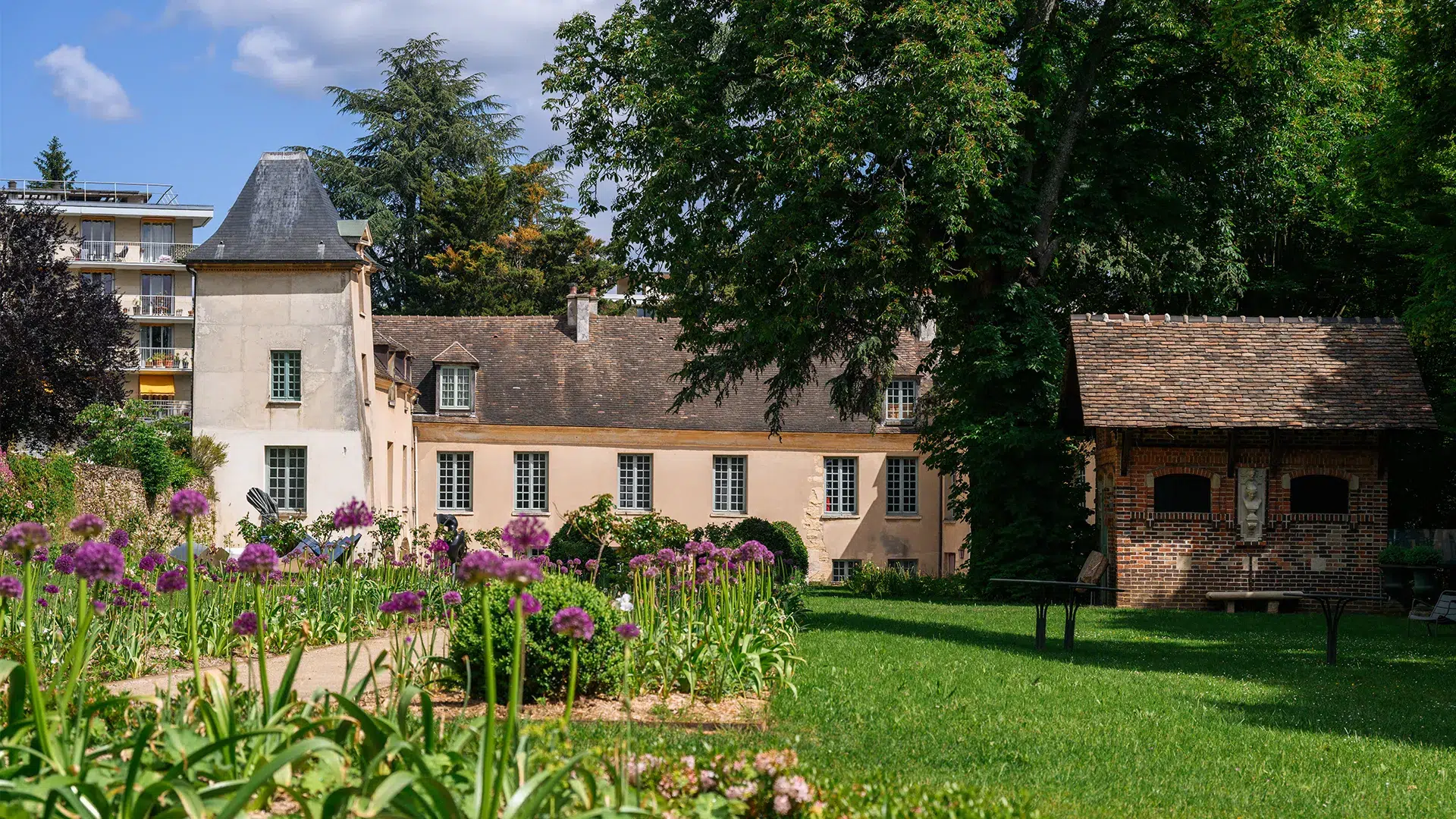
Quai Branly – Jacques Chirac Museum
37 Quai Branly
75007 PARIS
Opening hours
Through November 8, 2026
Tuesday through Sunday, 10:30 a.m. to 7:00 p.m.
Mondays during school breaks (all regions) from 10:30 a.m. to 7:00 p.m.
Late-night hours on Thursdays until 10:00 p.m.
Official website:
Prices
Full price: €14
Reduced price: €11
Free for those under 26