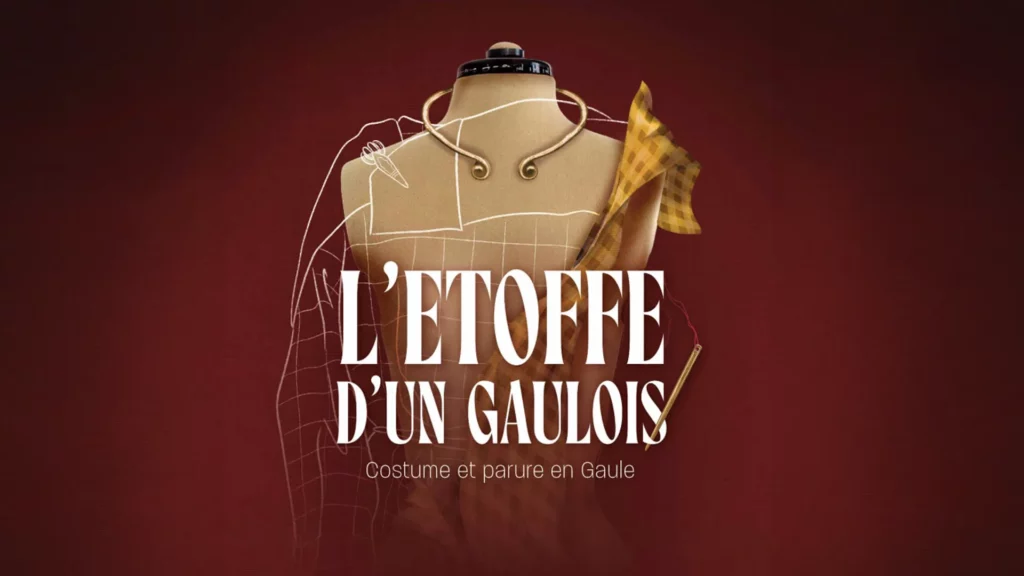

We often think we know the Gauls: mustachioed warriors, striped breeches, winged helmets… and yet, this image is largely a cliché! Forget Obélix’s blue-striped breeches and outdated stereotypes of barbarians clad in animal skins. The new exhibition at the Gergovie Museum invites us to take a fresh look and discover a reality that is far more subtle, refined, and surprising.
From April 4, 2026, to March 7, 2027, the exhibition “The Fabric of a Gaul: Clothing and Adornment in Gaul” reveals how our ancestors used their clothing and adornments not only for protection, but above all to stand out in society and assert their identity. Through archaeology, reenactments, and exceptional artifacts, it reveals a little-known yet essential aspect of these populations: their relationship to the body, identity, and aesthetics.
An archaeological investigation at the limits of what is possible
Describing the appearance of the Gauls is a real challenge for scientists. While metal, bone, and glass jewelry can survive for centuries, textile fibers (wool, linen) and leather generally disintegrate within a few weeks once buried. To present this collection to us, researchers and curators had to conduct a thorough investigation, relying on the rare fragments preserved in exceptional environments (wet areas or mineralization caused by contact with metal).
The exhibition is based on an approach known as experimental archaeology. By combining modern craftsmanship with scientific data, researchers have reconstructed ancient techniques—such as weaving on vertical looms—to bring long-lost fabrics back to life.

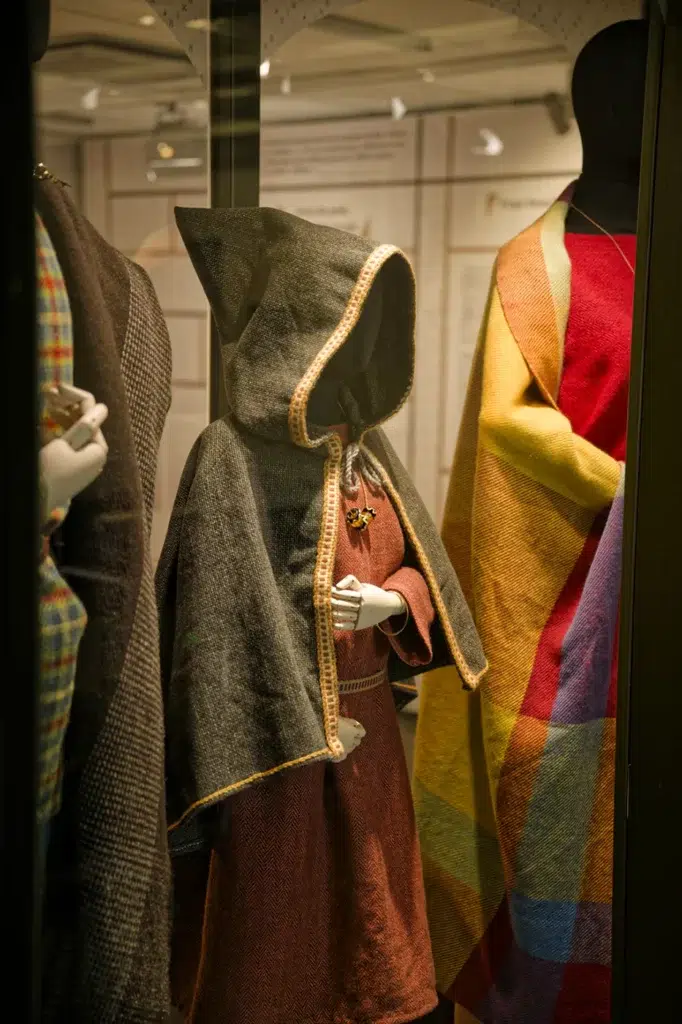
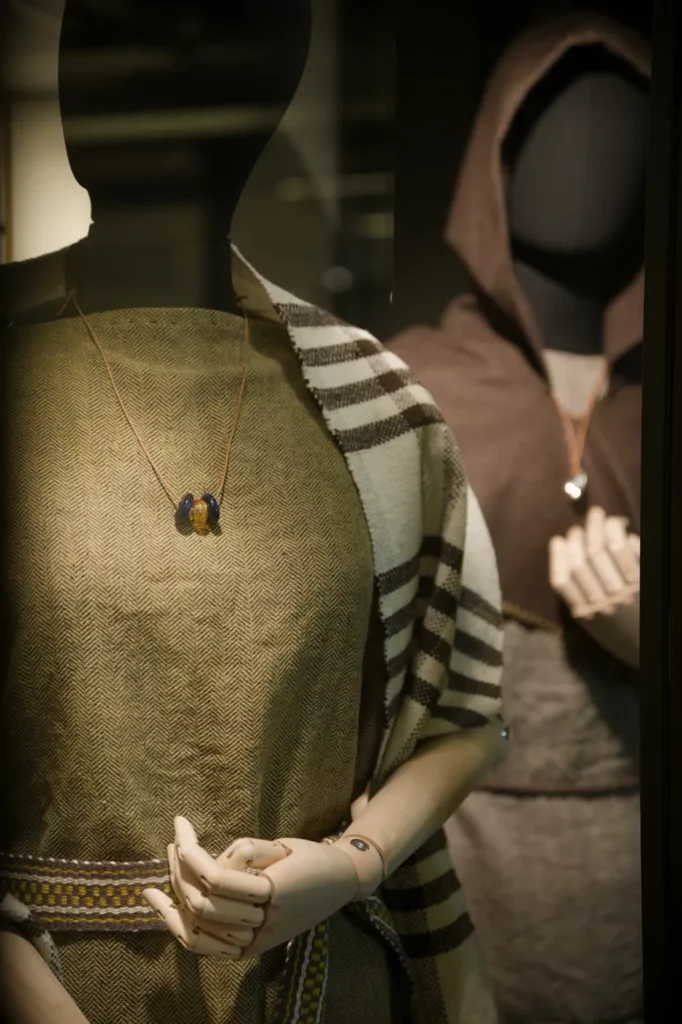
A cross between a clothing workshop and a fashion boutique
The exhibition’s uniqueness lies in its presentation. The exhibition design draws on the conventions of the contemporary fashion world. The exhibition is divided into two main sections:
The garment workshop: Here you’ll learn about the manufacturing process, from selecting fibers to weaving techniques.
The Shop: Designed as a retail space, it displays original archaeological artifacts. From jewelry to the latest arrivals from Rome, you can admire how trends have evolved in the territory of the Arverni.
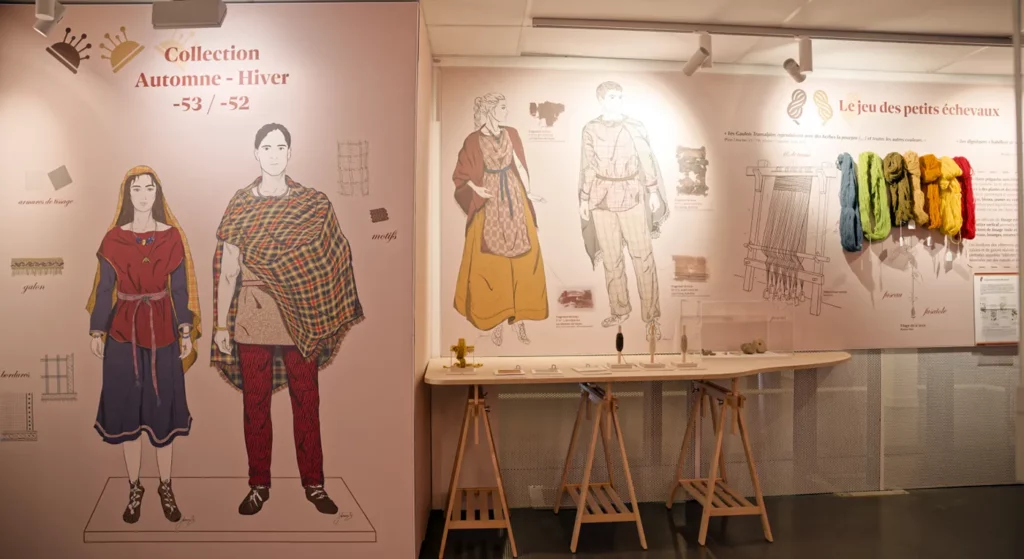
Breeches, sayon and tunics: Decoding the Gallic style
Did you know that the Gauls were the inventors of checkered fabrics? Far from being drab, their clothing featured vibrant colors and a variety of patterns. The exhibition lets you discover the highlights of their wardrobe:
- Breeches: these trousers—long or short, loose-fitting or tight—were the hallmark of the Gauls.
- The sayon: a large woolen garment worn as a cape, often striped or checkered.
- The tunic: worn with or without sleeves, it formed the basis of everyday attire.
- The cucullus: a very practical short cloak with a hood to protect against inclement weather.
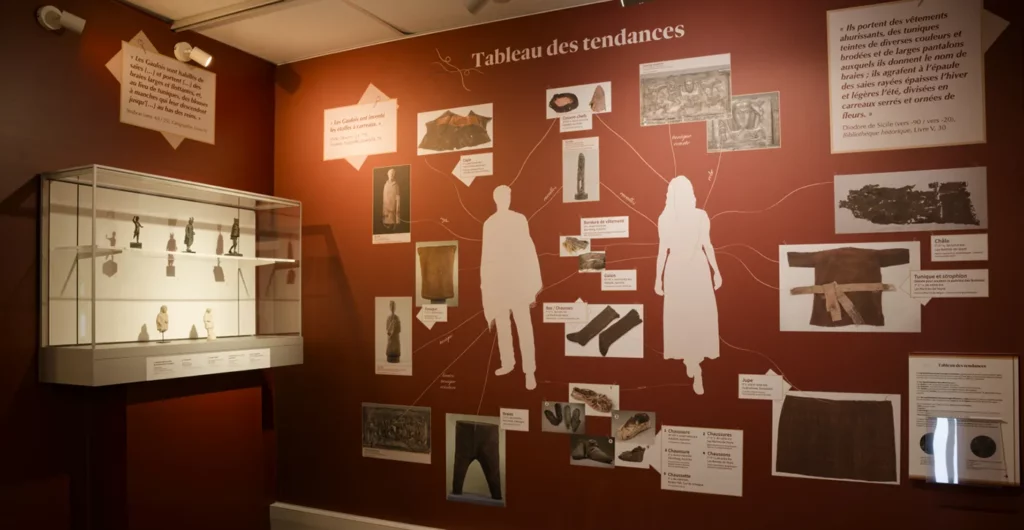
The Art of Shining: Signature Jewelry and Sets
For a Gaul, adornment is essential. Gold, bronze, and glass are crafted with incredible precision to create objects that serve as true symbols of social status.
- The torque: this famous rigid metal necklace, a symbol of power and status.
- The fibula: much more than just a safety pin for fastening clothing, it is a true fashion accessory whose designs have varied over the centuries.
- Bracelets and rings: worn in large numbers, they reflect the richness of local craftsmanship and the region’s openness to global markets at the time.
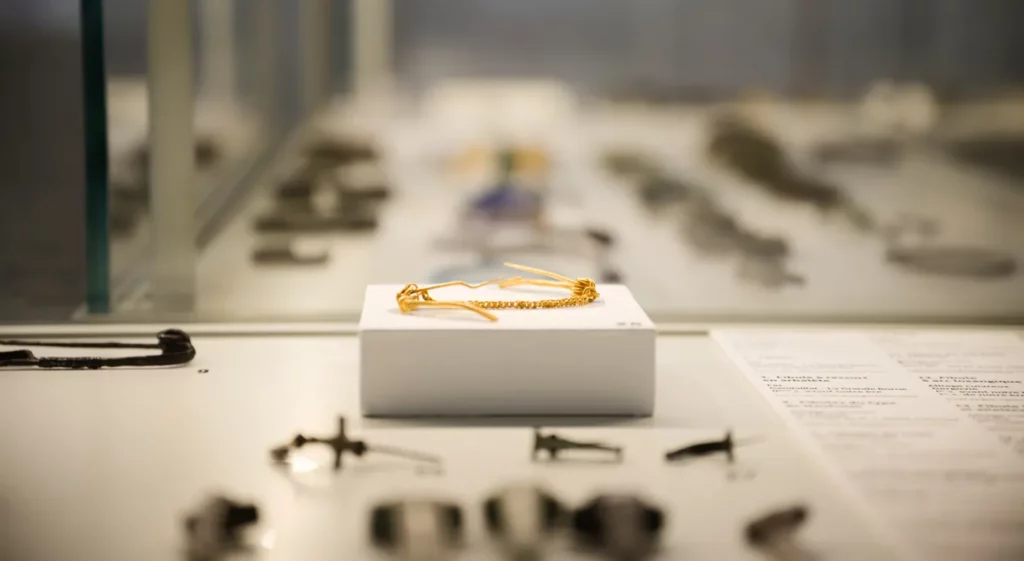
Some pieces of jewelry, finely crafted, are a testament to exceptional craftsmanship. Others reveal a variety of cultural influences, proof that the Gauls were far from isolated. Interaction with other peoples enriched their practices and styles.
But these objects are not merely decorative. They also carry meaning: symbols of power, signs of belonging, or ritual elements. The exhibition highlights this symbolic dimension.
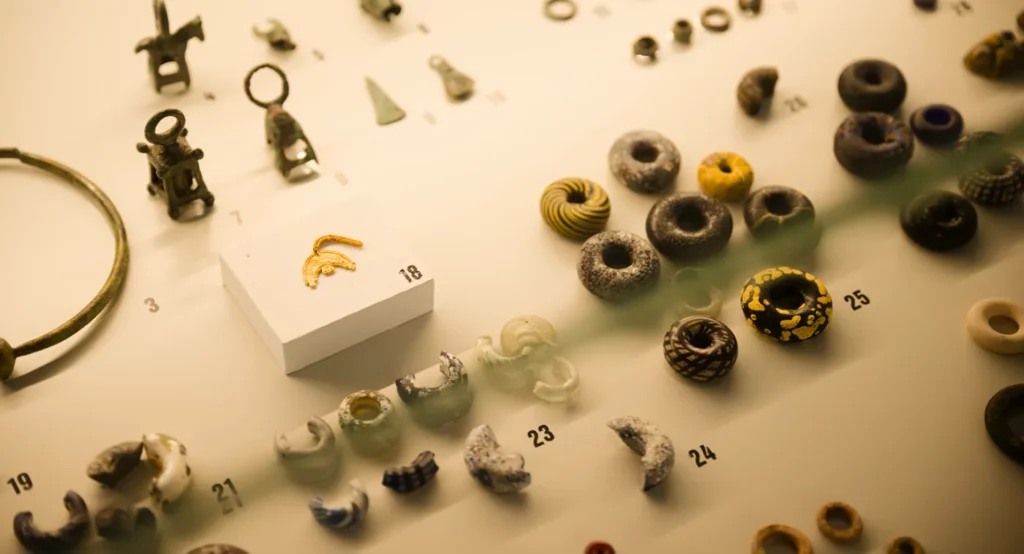
Beauty and Body Care: A Well-Groomed Appearance
The exhibition goes beyond clothing. It also explores the Gauls’ relationship with their bodies through the section “Hair Care, Facial Beauty”. From grooming tools to hair styling secrets, you’ll discover a society deeply concerned with its image and hygiene—far from the image of “barbarians” often portrayed.
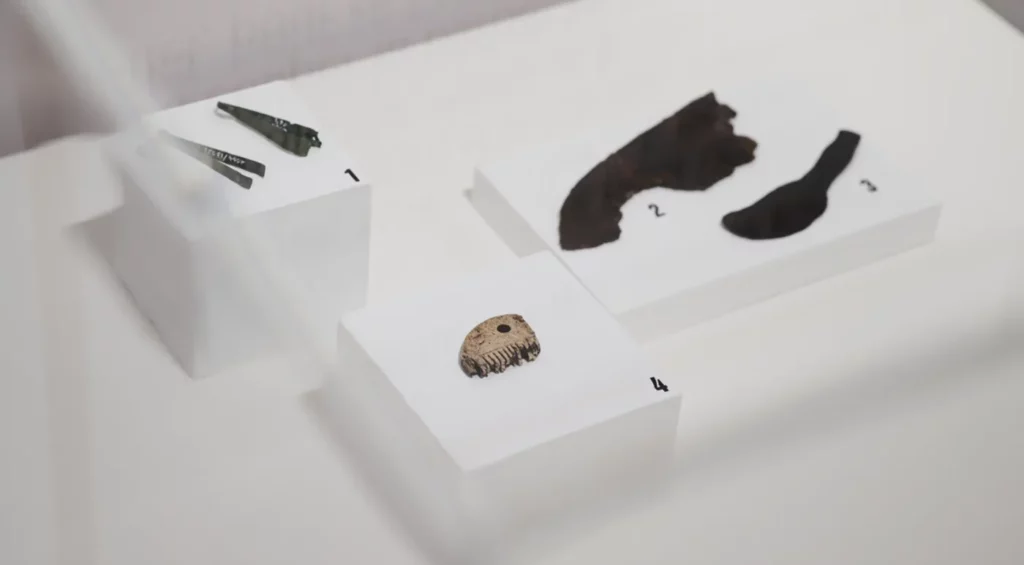
Seeing the Gauls in a New Light
One of the exhibition’s greatest strengths lies in its educational and visual approach. Based on archaeological findings, reconstructions allow visitors to vividly imagine what the Gauls looked like.
These reconstructions help visitors understand how the garments were worn, fitted, and paired. This context makes the exhibition particularly accessible, even for those who are not familiar with archaeology.
Practical informations
Adress:
Archaeological Museum of the Battle of Gergovia
Gergovia Plateau
63670 La Roche-Blanche
Opening hours:
Through March 7, 2027
Except during school holidays, Wednesdays, Saturdays, and Sundays from 1:00 PM to 6:00 PM
During school holidays, daily from 1:00 PM to 6:00 PM and from 11:00 AM to 7:00 PM in the summer
Official website:
https://musee-gergovie.fr/
Admission (temporary exhibition + permanent exhibition):
€9
€5 for ages 7–25
free for children under 7